

News Summary
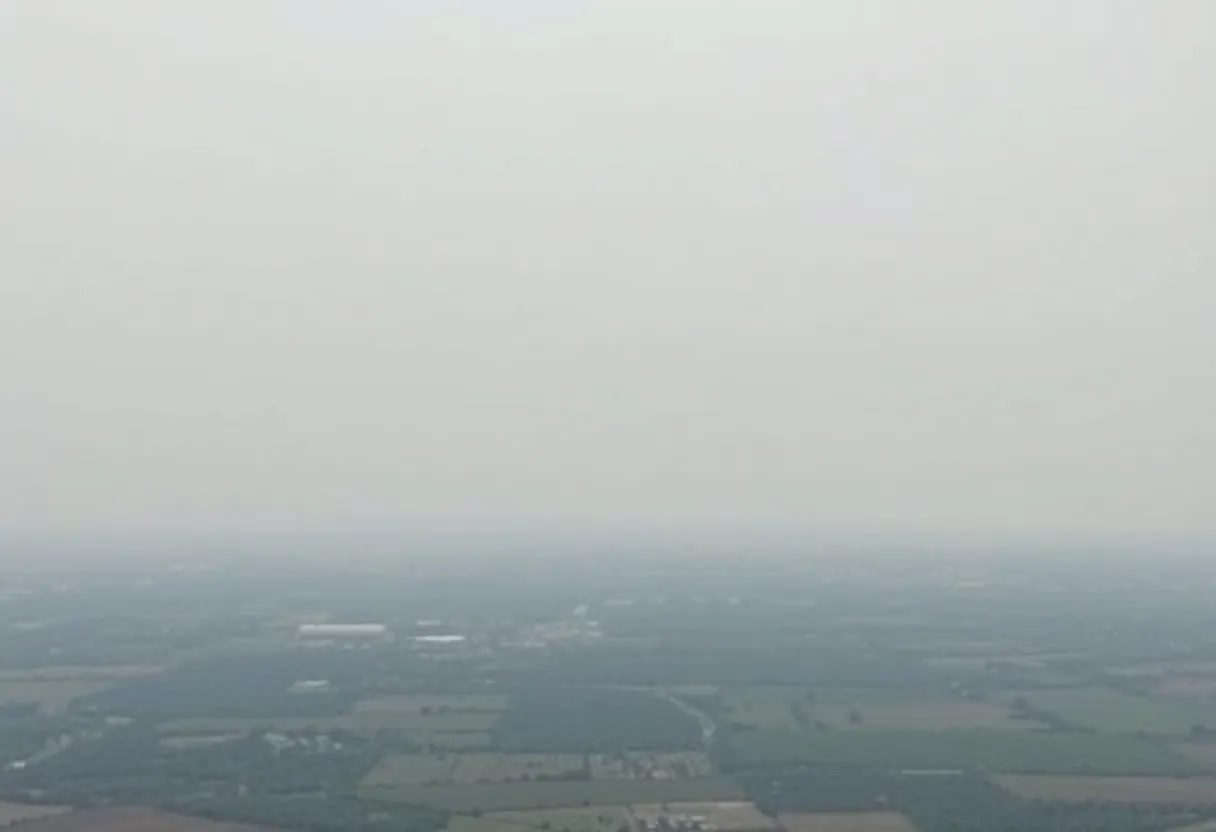
Residents in Central Texas are facing hazy skies and deteriorating air quality due to agricultural burning in Mexico. This issue is exacerbated by south winds carrying smoke across the border. Public health officials advise sensitive individuals to limit outdoor activities and wear masks. While the burning season is nearing an end, potential haze from a Saharan Dust Layer is anticipated later in the summer, complicating the region’s air quality situation.
Austin, Texas – Residents of Central Texas are experiencing hazy skies and poor air quality as a result of agricultural burning in Mexico. This phenomenon is most prominent during the dry season, which spans from mid-March to May. The practice, commonly utilized by Mexican farmers, involves burning land to clear unwanted vegetation. This method aims to replenish soil nutrients and promote the growth of pasture utilized for livestock.
The impact of these agricultural fires reaches across the border, particularly when winds shift southwards, carrying smoke into Central Texas. Data indicate that this smoke significantly contributes to deteriorating air quality in the region, primarily through the presence of particulate matter (PM2.5) and ozone. These pollutants pose a serious health risk as PM2.5 particles are notably smaller than a human hair, enabling them to infiltrate deep into the respiratory tract, ultimately reaching the lungs.
As long as agricultural burning remains prevalent and favorable south winds persist, air quality in Central Texas is expected to maintain moderate levels. During this period, particularly high humidity can exacerbate the situation, allowing fine particulate matter to linger in the atmosphere longer than usual. Additionally, wildfires can compound the problem, releasing gaseous pollutants, such as carbon monoxide, further amplifying public health threats associated with haze.
The presence of haze and poor air quality has prompted public health officials to recommend that sensitive individuals—such as those suffering from asthma, allergies, or other respiratory conditions—limit outdoor activities whenever haze is detected. Short-term effects of poor air quality can manifest as coughing, sneezing, and shortness of breath, while long-term exposure may lead to more severe health issues, including heart and lung diseases.
So far this year, Central Texas has reported eight “unhealthy for some” air quality days in Austin alone, surpassing typical occurrences for this time frame. The combination of elevated humidity levels and soaring temperatures has intensified the haze, leading to reduced visibility and increased health concerns.
Although the agricultural burning season in Mexico is nearing its end, which may lead to a reduction in smoke pollution, residents should be aware that another natural event could soon impact air quality. A Saharan Dust Layer is anticipated to arrive in mid-June and may contribute to additional haze and air quality issues spanning until mid-August. Thus, the region is facing a complex air quality situation influenced by both human and natural factors.
In light of these conditions, public health officials strongly advise sensitive groups to wear N95 masks while outside and to ensure that home air conditioning filters are functioning optimally. By taking these precautions, individuals can mitigate potential health risks associated with the current air quality challenges faced in Central Texas.
Deeper Dive: News & Info About This Topic
HERE Resources
Texas Legislators Advance Bills on Education and Food Safety
Texas Introduces Landmark School Choice Program
Search Intensifies for Missing Girl in Austin
Severe Weather Hits Central Texas
West Lake Hills Residents Alarmed by Elon Musk’s Security Measures
Austin to Host CultureMap Tastemaker Awards
Austin’s Thriving Food Scene: New Restaurants and Awards
Austin Planning Commission Approves Transit Hub Redevelopment
Trona Nominated for Bar of the Year at 2025 CultureMap Tastemaker Awards
Chef Anthony Martin Launches Limited-Time Restaurant ‘Residence’ in Austin
Additional Resources
- KXAN
- Wikipedia: Air Pollution
- Austin Monitor
- Google Search: Air Quality in Austin
- Austin Monthly
- Google Scholar: Sources of Haze
- KBTX
- Encyclopedia Britannica: Haze Pollution
- KSAT
- Google News: Smoke Impact South Texas