
Caribbean Sea, January 10, 2026
The U.S. military has intercepted and seized the Olina, an oil tanker linked to Venezuela’s oil exports, in the Caribbean Sea as part of ongoing efforts to enforce sanctions against the Maduro regime. This operation, the fifth of its kind under the Trump administration, demonstrates a strategic commitment to control Venezuelan oil distribution and support rebuilding efforts within the country’s oil infrastructure. International reactions have been mixed, with Russia denouncing the seizure as a breach of maritime law, escalating geopolitical tensions.
U.S. Forces Intercept Fifth Sanctioned Oil Tanker in Caribbean
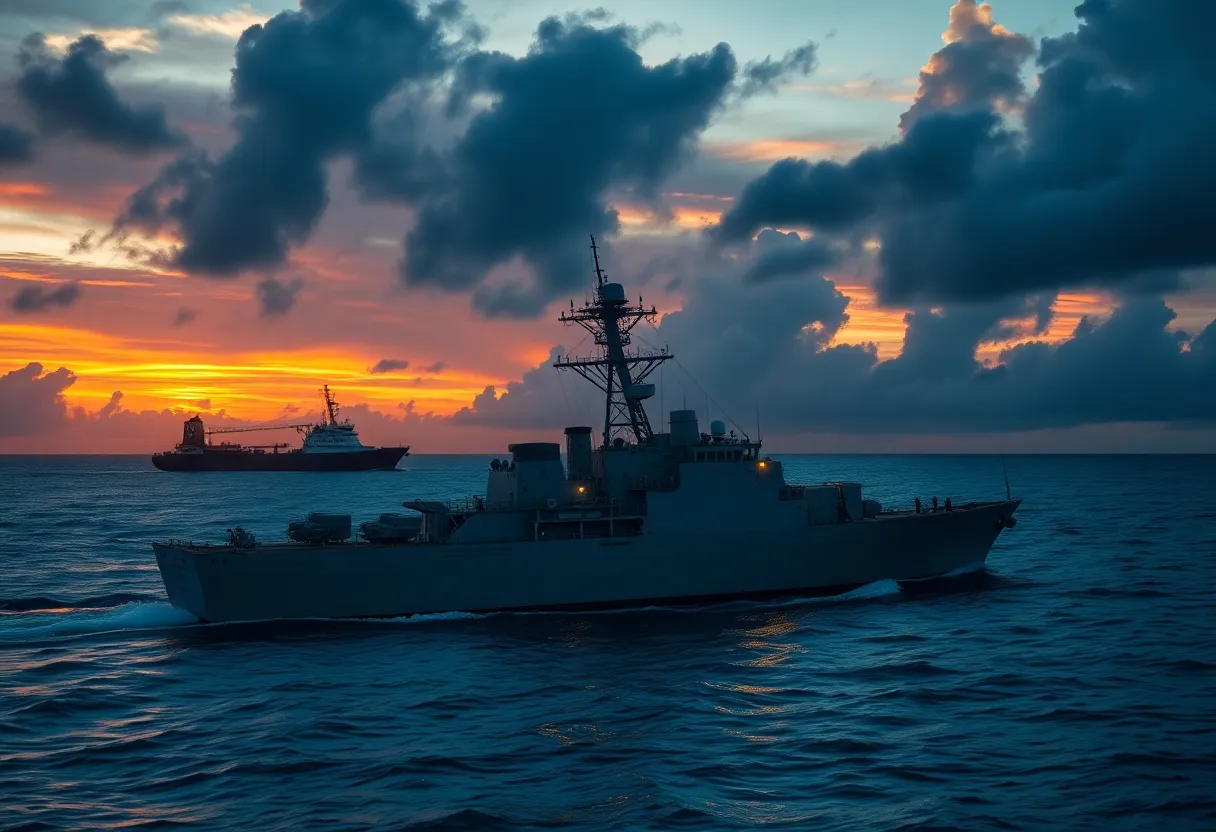
Austin, TX — On January 9, 2026, the U.S. military made headlines with the interception and seizure of the Olina, an oil tanker sanctioned for its ties to Venezuela’s oil exportation. This operation, carried out in the Caribbean Sea, is the fifth such seizure as the Trump administration escalates efforts to control oil distribution from Venezuela.
Employing a tactical approach, U.S. Marines and Navy personnel launched the operation from the USS Gerald R. Ford. The Olina, previously known as the Minerva M and re-flagged under Timor-Leste, was suspected of transporting embargoed oil from Venezuela and had been maneuvering to avoid detection.
Details of the Seizure
The Olina had been part of a fleet of 16 tankers that were found to be violating a U.S.-led maritime quarantine aimed at preventing the illicit distribution of sanctioned oil. The seizure signifies the U.S. government’s commitment to enforcing sanctions and aims to cripple the Maduro regime’s access to oil revenue. As part of this strategic enforcement, the U.S. plans to facilitate the sale of up to 50 million barrels of the embargoed oil and invest $100 billion into revamping Venezuela’s oil infrastructure.
U.S. Objectives and International Reactions
The U.S. objectives focus squarely on enforcing sanctions that impede the Venezuelan government while concurrently energizing its oil sector. President Trump stated that these actions are integral to collaborating with allies to restore Venezuela’s crumbling oil infrastructure. On the international front, reactions have varied, with Russia condemning the U.S. seizure as a transgression of international maritime law and characterizing it as an expression of U.S. “neo-colonial ambitions.” Such responses could lead to elevated tensions between Russia and the United States as they navigate this complex geopolitical landscape.
Background Context
The current seizure aligns with a larger pattern of U.S. activity over the past few years targeting vessels suspected of transporting sanctioned Venezuelan oil. The U.S. has previously intercepted vessels such as the Bella 1, later renamed Marinera, and the M/T Sophia. These actions reflect an ongoing commitment to managing the flow of oil from Venezuela and serve as a cautionary tale for others who may seek to defy economic sanctions.
Key Features of the Seizure
| Feature | Details |
|---|---|
| Vessel Name | Olina (formerly Minerva M) |
| Flag | Timor-Leste (false flag) |
| Location of Seizure | Caribbean Sea |
| Operation Date | January 9, 2026 |
| U.S. Military Involved | Marines and Navy personnel from USS Gerald R. Ford |
| Purpose of Seizure | Enforce sanctions and control Venezuela’s oil revenue |
| International Response | Russia condemned the action as a breach of international maritime law |
Frequently Asked Questions (FAQ)
What is the Olina?
The Olina is an oil tanker previously known as Minerva M, which had been re-flagged under Timor-Leste. It was intercepted by U.S. forces in the Caribbean Sea on January 9, 2026, for suspected involvement in transporting embargoed oil from Venezuela.
Why did the U.S. seize the Olina?
The U.S. government aims to enforce sanctions and control Venezuela’s oil revenue. The seizure is part of a broader strategy to rebuild Venezuela’s oil infrastructure and prevent the illicit distribution of sanctioned oil.
How did Russia respond to the seizure?
Russia condemned the U.S. action, labeling it a breach of international maritime law and reflecting U.S. “neo-colonial ambitions.” The Russian Foreign Ministry called the seizure an act of piracy and warned of increased tensions.
What other vessels have been seized by the U.S.?
Prior to the Olina, the U.S. seized the Bella 1, renamed Marinera, and the M/T Sophia. These actions are part of the U.S. strategy to enforce sanctions against the Maduro regime and control Venezuela’s oil distribution.
Deeper Dive: News & Info About This Topic
HERE Resources