

Austin, August 24, 2025
News Summary
The Texas Senate has passed a contentious redistricting bill designed to favor Republican candidates in future elections. Known as ‘One Big Beautiful Map’, this new congressional map will add five Republican-leaning districts. Democratic lawmakers have objected to the bill, citing concerns over voter suppression and legal violations. The bill’s approval highlights the intensifying political divide as both parties vigorously reshape electoral boundaries ahead of the crucial midterm elections in 2026.
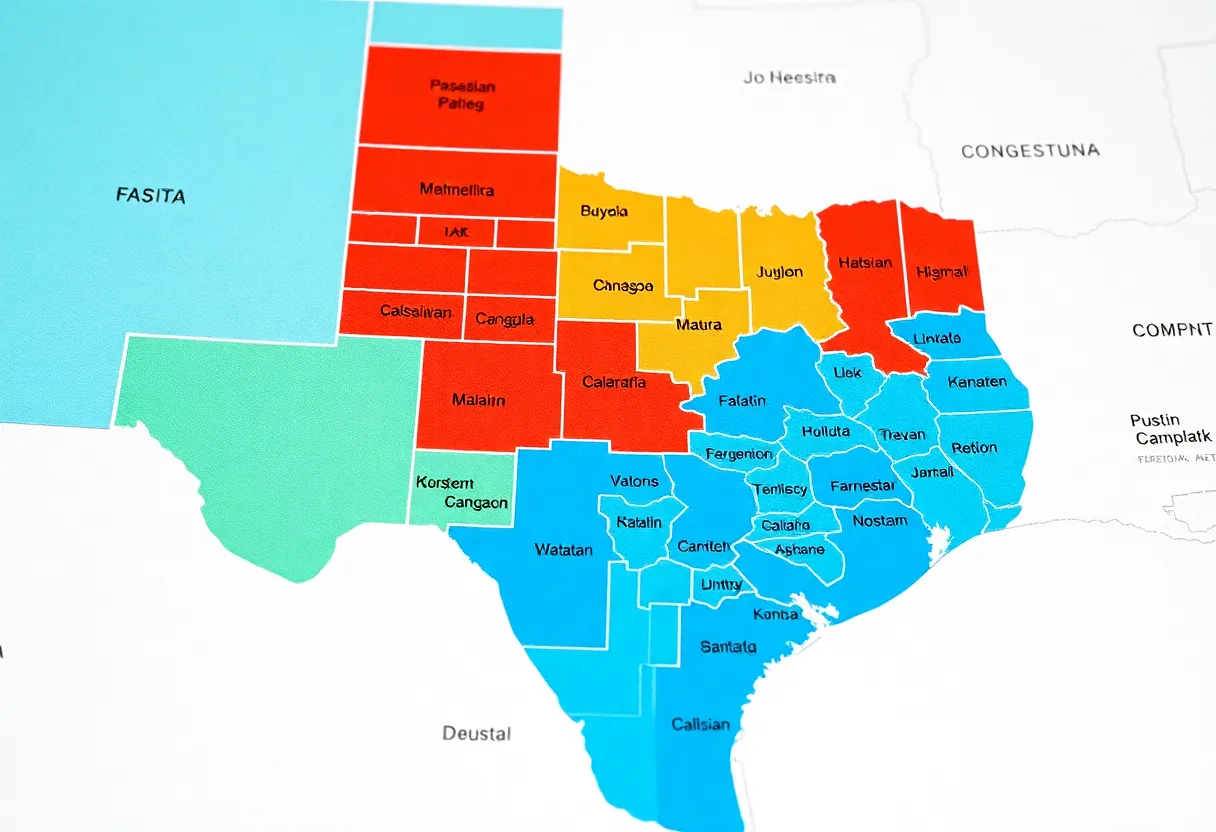
Austin, Texas – The Texas Senate approved a controversial redistricting bill on August 23, 2025, that is poised to favor Republicans in the upcoming elections. The bill, informally dubbed “One Big Beautiful Map,” is set to be signed into law by Governor Greg Abbott soon, following its passage during a special legislative session.
The newly designed congressional map aims to bolster the Republican Party’s chances of retaining its narrow majority in Congress by incorporating five additional Republican-leaning districts. This move comes in the wake of pressure from former President Donald Trump, who has urged Republican-led states to revise their voting districts in order to secure more seats for the GOP.
The Texas Senate’s decision came after a protracted debate marked by Democratic lawmakers’ attempts to mount a walkout and other tactics designed to stall the process. Democrats have voiced strong opposition to the bill, accusing the Republican leadership of suppressing debate and stifling dissent while steering the redistricting process.
Accusations and Challenges
The approval of the redistricting map has raised tensions not only within Texas but also in the broader national context surrounding voting rights and representation ahead of the crucial 2026 midterm elections. Texas Lieutenant Governor Dan Patrick endorsed the map, asserting that it reflects the voting preferences of Texans.
Critics of the redistricting effort have raised legal concerns, alleging that the map may violate the Voting Rights Act by diminishing the influence of minority voters. Phil King, the Texas State Senator who sponsored the bill, has defended the legality of the map and its potential to support Republican candidates.
Democratic leaders have pledged to contest the map in court once it is signed into law, asserting the need to protect the voting rights of all Texans. The political ramifications of the redrawing are evident; notable Democratic Representative Lloyd Doggett has announced he will not seek reelection due to the new map overlapping with another incumbent’s district.
Nationwide Implications
This redistricting effort is part of a larger trend observed across the nation, where both parties are aggressively recalibrating electoral maps to solidify their power. Notably, California is also in the process of proposing new district maps intended to benefit Democrats, pending voter approval in a special election.
The contemporary redistricting debate has stirred discussions regarding the traditional practices of redrawing district lines, which normally occur in the aftermath of the decennial census. The choice by Texas lawmakers to alter district boundaries mid-decade has further ignited discourse about the long-term consequences of such strategic maneuvers.
As political polarization intensifies in American politics, the approval of the redistricting bill represents a significant step by the Republican Party to fortify its position as the nation heads toward the pivotal midterm elections.
Conclusion
The passage of the redistricting bill and the aggressive strategies employed by both parties epitomize a shift in how electoral maps are drawn, reflecting a determined effort to retain or gain control in upcoming elections. As challenges to the new congressional map loom, the outcome may have ripple effects that influence the political landscape in Texas and beyond.
FAQs
What is the significance of the Texas redistricting bill?
The bill redraws congressional district boundaries in Texas, favoring Republican candidates and potentially impacting the outcome of the 2026 midterm elections.
What are the main criticisms against the new map?
Critics argue that the new map violates the Voting Rights Act by diluting the voting power of minority groups and suppressing debate during the redistricting process.
How are other states responding to redistricting efforts?
Other states, like California, are also proposing new maps that favor Democrats, whereas many Republican-led states are pushing for maps beneficial to their party, showcasing nationwide polarization in electoral strategies.
Deeper Dive: News & Info About This Topic
HERE Resources
Texas Schools Adjust to New Legislative Changes
Texas Senate Passes Controversial Congressional Map
Texas Senate Passes Controversial Redistricting Bill HB 4
Texas Senate Approves Controversial Redistricting Map
Eddie Garcia Appointed New Police Chief of Fort Worth
Lloyd Doggett Announces Potential Retirement Amid Redistricting
University of Texas at Austin Names New President
Texas Students Face Tuition Hikes Amid Dwindling Financial Support
One Dead and One Critically Injured in South Austin House Fire
Texas Democrats Protest Surveillance Measures Amid Redistricting Battle
Additional Resources
- NBC News
- Wikipedia: Redistricting
- AP News
- Google Search: Texas redistricting 2025
- Axios Austin
- Google Scholar: Texas redistricting 2025
- LA Times
- Encyclopedia Britannica: Texas redistricting
- CBS Austin
- Google News: Texas redistricting