

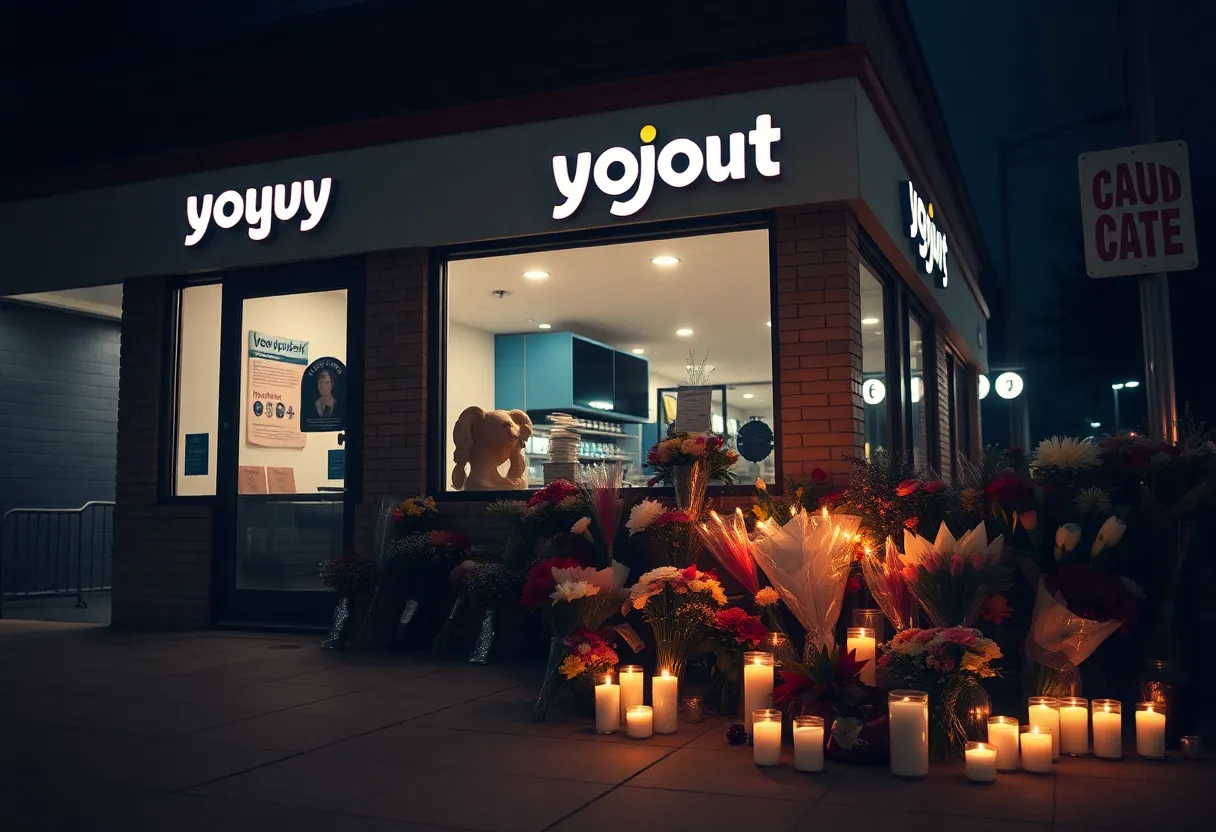
Austin, TX, September 30, 2025
News Summary
Austin police have identified Robert Eugene Brashers as the prime suspect in the cold case of four teenage girls murdered nearly 34 years ago. The investigation into their brutal deaths led to new DNA testing connecting Brashers to the crime scene. Families of the victims express a mix of relief and ongoing grief as law enforcement continues to explore potential links to other unsolved cases. This significant breakthrough highlights the need for modern forensic techniques in resolving cold cases, underlining the importance of justice for victims.
Austin police have identified Robert Eugene Brashers as the prime suspect in the nearly 34-year-old cold case involving the murders of four teenage girls. This conclusion follows a detailed investigation into the killings of Jennifer Harbison, Eliza Thomas, Sarah Harbison, and Amy Ayers, who were brutally murdered on December 6, 1991, in an “I Can’t Believe It’s Yogurt!” shop in Austin.
The press conference held on Monday outlined how investigators arrived at this identification, primarily through a combination of DNA testing, ballistics examinations, and traditional police work. Significant recent developments include new DNA testing that linked DNA found under Amy Ayers’ fingernails to Brashers, indicating that she resisted during the attack.
In addition, police matched Brashers’ gun to ballistics evidence found at the scene, further underscoring his involvement in the murders. Brashers had a known criminal history that included three other murders and various violent felonies and had died by suicide in 1999 during a police standoff.
The investigation had previously gone cold, with four individuals wrongfully arrested in connection with the murders, resulting in significant miscarriages of justice. Renewed efforts by the Austin Police Department’s cold case unit and the Texas Attorney General’s office played a crucial role in revitalizing the case and ultimately uncovering new evidence linking Brashers to the crime.
Families of the victims expressed a mix of relief and ongoing grief, having long searched for answers and closure. Investigators with the cold case unit believe that Brashers could potentially be connected to more unsolved murders across other states. This case has ignited conversations about the importance of pursuing cold cases with modern forensic techniques, as they strive to achieve justice for the victims.
Background on the Yogurt Shop Murders
The murders of Jennifer Harbison, Eliza Thomas, Sarah Harbison, and Amy Ayers were heinous and shocking events that took place in the early 1990s. The victims were discovered bound, shot, and their bodies were set on fire in a local yogurt shop, leading to a large-scale investigation and various leads that ultimately fizzled over time. The case became emblematic of the challenges faced in resolving cold cases, particularly those involving young victims.
The Investigation Process
Law enforcement began to utilize modern forensic techniques as advancements in DNA testing became available. Investigators have been working relentlessly in recent years to reexamine old evidence. The combination of traditional investigative methods and scientific advancements allowed them to finally tie Brashers to the crime scene, enabling a reexamination of the evidence that had lingered unsolved for decades.
Broader Implications
The identification of a suspect in this long-standing case highlights a crucial movement within law enforcement regarding the pursuit of cold cases. The utilization of modern forensic science is increasingly recognized as vital in delivering justice for victims and their families. The Austin case serves as a poignant example that could similarly inspire action in other unresolved cases across the nation.
FAQ Section
Who is the identified suspect in the Yogurt Shop Murders?
Austin police believe they have solved a nearly 34-year-old cold case involving the murders of four teenage girls, identifying Robert Eugene Brashers as the suspect.
When did the murders take place?
The murders occurred on December 6, 1991.
How were the victims discovered?
The victims were discovered bound, shot, and their bodies were set on fire in an “I Can’t Believe It’s Yogurt!” shop in Austin.
What evidence linked Brashers to the murders?
Significant recent developments included new DNA testing that linked DNA found under Amy Ayers’ fingernails to Brashers and ballistics evidence matching his gun to the crime scene.
How did the investigation proceed after many years?
Renewed efforts by the Austin Police Department’s cold case unit and the Texas Attorney General’s office played a crucial role in revitalizing the investigation and uncovering new evidence.
Key Features of the Case
| Feature | Description |
|---|---|
| Victims | Jennifer Harbison, Eliza Thomas, Sarah Harbison, and Amy Ayers |
| Location | “I Can’t Believe It’s Yogurt!” shop in Austin |
| Date | December 6, 1991 |
| Identified Suspect | Robert Eugene Brashers |
| Key Evidence | DNA under Amy Ayers’ fingernails and ballistics matching |
| Significant History | Brashers had a prior criminal history including three other murders |
Deeper Dive: News & Info About This Topic
HERE Resources
Suspect Identified in Austin Yogurt Shop Murders
Breakthrough in Yogurt Shop Murders Case in Austin
DNA Evidence Identifies Suspect in Austin Yogurt Shop Murders
Prime Suspect Identified in Yogurt Shop Murders
Breakthrough in Yogurt Shop Murders Case
Texas Man Claims to be Jesus During Deadly Target Shooting
Austin Police Identify Suspect in Yogurt Shop Murders
1991 Yogurt Shop Murders Case Solved in Austin
Breakthrough in 1991 Yogurt Shop Murders Case
Yogurt Shop Murders in Austin Finally Solved
Additional Resources
- Austin American-Statesman
- Wikipedia: Yogurt Shop Murders
- Fox News
- Google Search: Yogurt Shop Murders
- The New York Times
- Google Scholar: Yogurt Shop Murders
- CBS News
- Encyclopedia Britannica: Yogurt Shop Murders
- KXAN
- Google News: Yogurt Shop Murders