

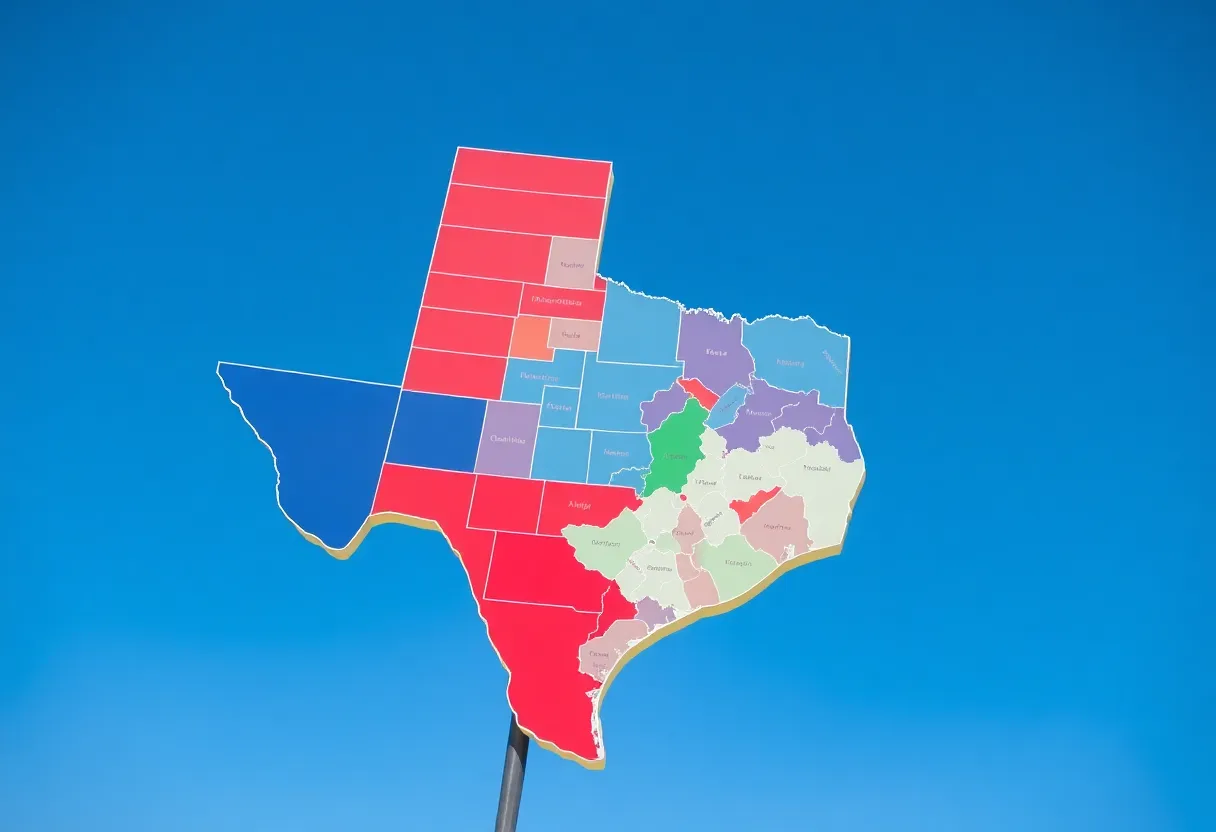
Austin, TX, December 5, 2025
The U.S. Supreme Court has reinstated a redrawn Texas electoral map that could shift up to five U.S. House seats from Democrats to Republicans. This controversial ruling raises concerns about gerrymandering and voter protections as it changes the state’s political landscape ahead of the 2026 midterm elections. The decision reflects ongoing debates about electoral fairness and the influence of party alignment on redistricting.
Supreme Court Revives Pro-Republican Texas Voting Map
The U.S. Supreme Court has reinstated a redrawn Texas electoral map potentially reshaping the political landscape.
Austin, TX – The recent decision by the U.S. Supreme Court to reinstate a redrawn Texas electoral map has sparked significant discussion regarding its implications for the political balance in the state and beyond. This ruling, which potentially favors Republicans by shifting up to five Democratic-held U.S. House seats to the GOP for the upcoming 2026 midterm elections, underscores ongoing debates about the fairness of electoral processes and the implications of gerrymandering. It reflects a larger narrative of political strategy that has direct ramifications on local and state governance.
The Court’s 6-3 decision overturned a lower court ruling that had deemed the map likely in violation of constitutional protections against racial discrimination. The Supreme Court criticized the lower court for disrupting ongoing primaries and failing to acknowledge the state’s partisan objectives, suggesting a more flexible approach to electoral redistricting. While some celebrate this ruling as a victory for conservative interests, others warn of potential negative consequences for voter protections and equitable representation.
Implications of the Supreme Court Ruling
The impact of the Supreme Court’s ruling is poised to extend beyond the immediate electoral shifts. By greenlighting a map that may enhance Republican representation, the ruling could influence legislative priorities and decision-making processes in Congress. Proponents argue that the decision reflects an important recognition of state legislative authority and the right to draw electoral boundaries that reflect the political landscape.
Context of the Redistricting Debate
This ruling reflects a national trend where both major parties utilize gerrymandering as a strategic tool to consolidate power. In Texas, a growing economy and burgeoning population have led to increased scrutiny of how electoral districts are drawn. As businesses and populations shift within the state, the relevance of fair representation becomes crucial to maintaining engagement in the political process.
Reactions from the Community
Local leaders are divided on the ramifications of this decision. Supporters of the map, including Texas Attorney General Ken Paxton, characterize it as a well-deserved win for Republican voters, arguing it allows for greater representation of their interests. Conversely, critics express concerns that it could lead to the marginalization of certain voter demographics, particularly in communities of color, thereby highlighting the need for strong voter protections.
Economic Perspectives
The debate surrounding electoral maps often intersects with economic considerations. A favorable political climate can foster entrepreneurial innovation and economic growth. By allowing businesses to have representation that aligns with their interests, local entrepreneurs may find themselves better supported in terms of policy and regulation. On the flip side, regulatory frameworks that encourage inclusiveness and fair representation can also be beneficial to the economy by promoting diverse business ecosystems.
Conclusion
As Texas moves forward in the electoral process, the implications of this Supreme Court ruling will undoubtedly shape the political and economic landscape for years to come. Stakeholders from all corners of the community are encouraged to engage actively with local governance and support initiatives that bolster fair representation. By staying informed and participating in the electoral process, citizens can play a pivotal role in influencing Texas’s future.
Frequently Asked Questions
What did the Supreme Court decide regarding the Texas electoral map?
The Supreme Court reinstated a redrawn Texas electoral map designed to favor Republicans, potentially shifting up to five Democratic-held U.S. House seats to the GOP in the 2026 midterm elections.
What was the lower court’s ruling on the Texas electoral map?
The lower court had found the map likely violated constitutional protections against racial discrimination.
What was the Supreme Court’s reasoning for reinstating the map?
The Supreme Court criticized the lower court for interfering with ongoing primaries and not considering the state’s partisan objectives.
What are the implications of this decision?
The decision could lead to a shift in the balance of power in the U.S. House of Representatives, with Republicans potentially gaining additional seats. Critics warn it exemplifies the decline of voter protections following the weakening of the Voting Rights Act.
| Key Feature | Description |
|---|---|
| Supreme Court Decision | Reinstated a redrawn Texas electoral map favoring Republicans, potentially shifting up to five Democratic-held U.S. House seats to the GOP in the 2026 midterm elections. |
| Lower Court’s Ruling | Found the map likely violated constitutional protections against racial discrimination. |
| Supreme Court’s Reasoning | Criticized the lower court for interfering with ongoing primaries and not considering the state’s partisan objectives. |
| Implications | Potential shift in the balance of power in the U.S. House of Representatives, with Republicans potentially gaining additional seats. Critics warn it exemplifies the decline of voter protections following the weakening of the Voting Rights Act. |
Deeper Dive: News & Info About This Topic
HERE Resources
Key Business Developments in Austin, Texas
South Austin Parents Oppose Proposed School Closures
AISD Proposes Closure of 13 Schools Amid Budget Deficit
Texas Governor Signs Controversial Redistricting Bill
Texas Governor Signs Gerrymandering Bill, Legal Battles Loom
Legal Challenges Arise Over Texas Congressional Redistricting Bill
Texas Senate Approves Controversial Redistricting Bill
Texas Senate Passes Controversial Congressional Map
Texas Senate Passes Controversial Redistricting Bill HB 4
Texas Democrats Protest Surveillance Measures Amid Redistricting Battle