

Austin, January 3, 2026
Residents in Austin, Texas, were surprised to see a significant sinkhole that formed overnight after heavy rainfall. City officials are currently assessing the situation and ensuring public safety as concerns rise regarding the city’s infrastructure. The incident highlights the geological vulnerabilities of the region, particularly due to its limestone bedrock, which is prone to erosion and collapse after severe weather events.
Austin, Texas, Residents Awaken to Massive Sinkhole After Heavy Rain
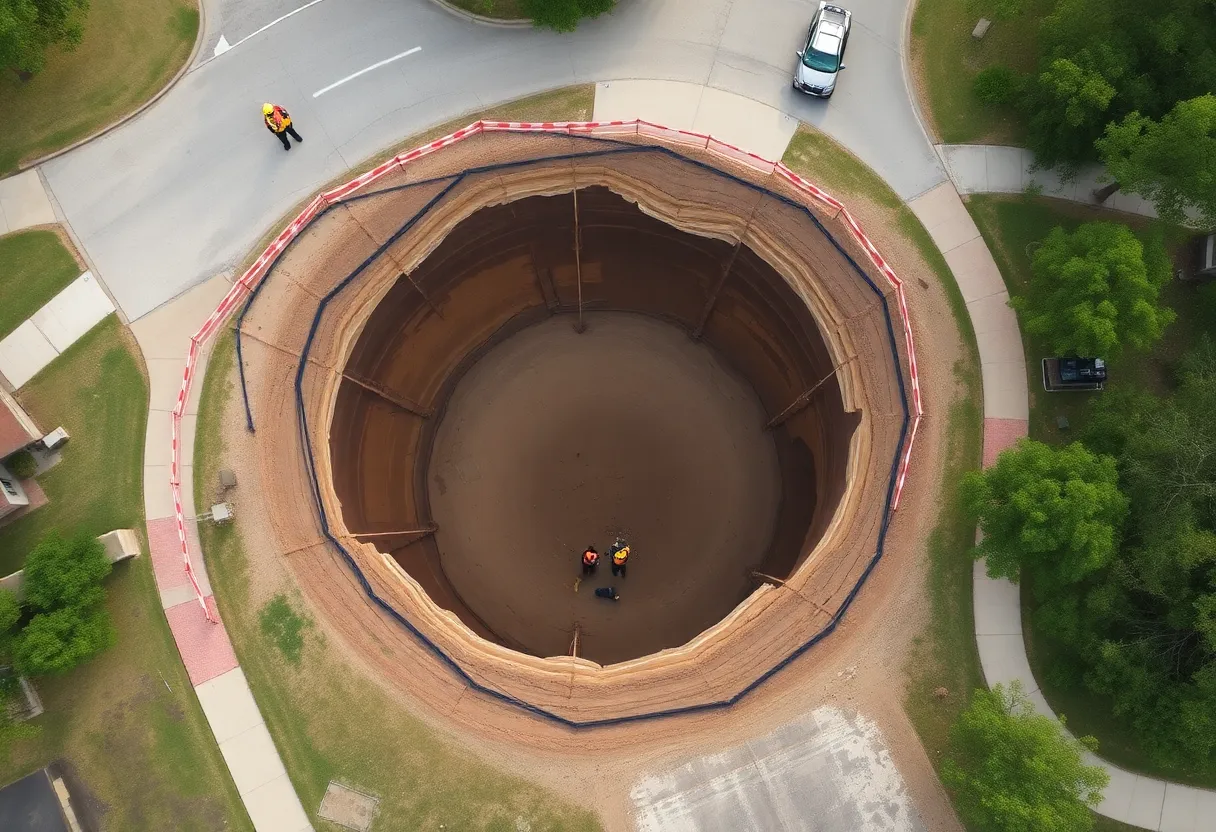
Austin, Texas – Residents in a local neighborhood were startled to find a large sinkhole that had developed overnight following substantial rainfall in the area. The sinkhole, which appeared on a residential road, has raised concerns about the city’s infrastructure and the impact of heavy rains on the region’s geology.
Sinkhole Formation and Immediate Impact
The sinkhole emerged after a period of heavy rainfall, leading to the collapse of the road surface. Local authorities have cordoned off the area to ensure public safety and are currently assessing the extent of the damage. No injuries have been reported, but the incident has disrupted traffic and raised questions about the stability of similar infrastructure in the city.
Geological Context and Historical Precedents
Austin’s underlying geology, characterized by limestone formations, makes the area susceptible to sinkholes, especially after significant rainfall. The Edwards Group limestones, associated with the Edwards Aquifer, are known to dissolve over time, creating voids that can lead to surface collapses. This phenomenon is part of a broader geological process known as karst topography, which is prevalent in the region.
Historically, Austin has experienced similar incidents. For instance, in 2012, a significant sinkhole formed in the Arbor Trails development area after heavy rains, highlighting the city’s vulnerability to such geological events.
City’s Response and Future Measures
City officials are collaborating with geologists and engineers to evaluate the cause of the sinkhole and to develop strategies to prevent future occurrences. Public safety remains a top priority, and residents are advised to stay informed through official channels regarding any developments or necessary precautions.
Understanding Sinkholes in Austin
Sinkholes in Austin typically form when water erodes the limestone bedrock, creating underground voids. When these voids become large enough, the surface above can collapse, resulting in a sinkhole. This process is influenced by factors such as rainfall intensity, groundwater levels, and the structural integrity of the surface materials.
Conclusion
The recent sinkhole in Austin serves as a reminder of the city’s unique geological characteristics and the importance of proactive infrastructure management. Ongoing assessments and community awareness are essential in mitigating the risks associated with such natural events.
Frequently Asked Questions (FAQ)
What caused the sinkhole in Austin?
The sinkhole formed after a period of heavy rainfall, which led to the collapse of the road surface. Austin’s limestone geology makes the area susceptible to such occurrences.
Have there been similar incidents in Austin before?
Yes, in 2012, a significant sinkhole formed in the Arbor Trails development area after heavy rains, highlighting the city’s vulnerability to such geological events.
What is the city doing in response to the sinkhole?
City officials are collaborating with geologists and engineers to evaluate the cause of the sinkhole and to develop strategies to prevent future occurrences. Public safety remains a top priority.
How do sinkholes form in Austin?
Sinkholes in Austin typically form when water erodes the limestone bedrock, creating underground voids. When these voids become large enough, the surface above can collapse, resulting in a sinkhole.
What should residents do if they encounter a sinkhole?
Residents should avoid the area, report the sinkhole to local authorities, and follow any safety instructions provided by city officials. Staying informed through official channels is crucial.
Key Features of the Austin Sinkhole Incident
| Feature | Description |
|---|---|
| Location | Austin, Texas |
| Cause | Heavy rainfall leading to road surface collapse |
| Geological Factors | Limestone bedrock susceptible to erosion, creating voids |
| Historical Context | Similar sinkhole incidents in 2012, highlighting regional vulnerability |
| City’s Response | Collaboration with geologists and engineers to assess and prevent future occurrences |
Deeper Dive: News & Info About This Topic
HERE Resources
Austin’s Culinary Scene Shines Bright in 2024!

Author: STAFF HERE AUSTIN WRITER
The AUSTIN STAFF WRITER represents the experienced team at HEREAustinTX.com, your go-to source for actionable local news and information in Austin, Travis County, and beyond. Specializing in "news you can use," we cover essential topics like product reviews for personal and business needs, local business directories, politics, real estate trends, neighborhood insights, and state news affecting the area—with deep expertise drawn from years of dedicated reporting and strong community input, including local press releases and business updates. We deliver top reporting on high-value events such as SXSW, Austin City Limits Music Festival, Formula 1 United States Grand Prix, and the Austin Film Festival. Our coverage extends to key organizations like the Greater Austin Chamber of Commerce and Visit Austin, plus leading businesses in technology, automotive, and retail that power the local economy such as Dell Technologies, Tesla, and Apple. As part of the broader HERE network, including HERECollegeStation.com, HEREDallas.com, HEREHouston.com, and HERESanAntonio.com, we provide comprehensive, credible insights into Texas's dynamic landscape.