

Austin, August 5, 2025
News Summary
As the 2026 elections draw near, Texas and California Democrats are engaged in intense redistricting battles impacting congressional representation. Texas Democrats have fled to deny Republicans a quorum for a favorable congressional map, while California’s proposals aim to increase Democrat-held seats. These efforts reflect a broader political strategy to counter the influence of the GOP and former President Trump, highlighting the stakes and challenges in shaping future electoral dynamics.
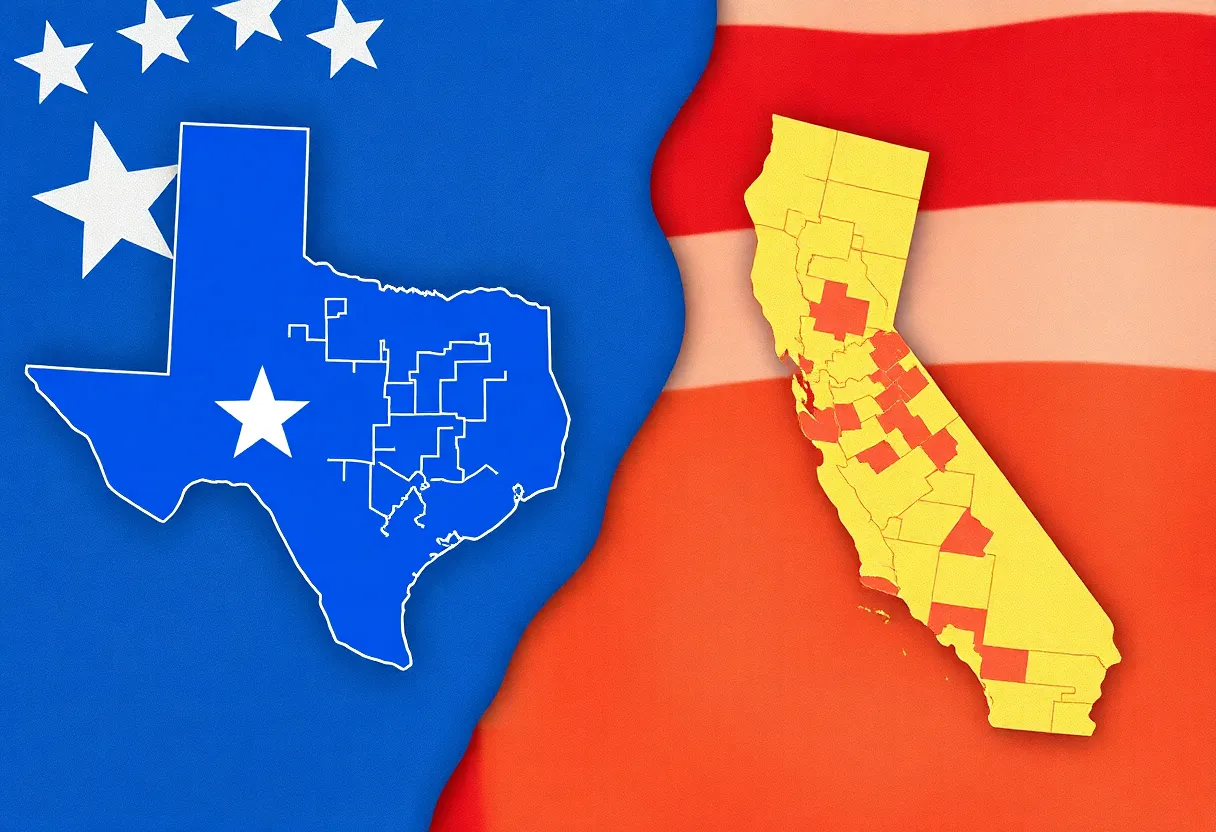
Austin, Texas – As the political landscape intensifies in preparation for the 2026 elections, California and Texas Democrats are engaged in a fierce battle over congressional redistricting that has implications for the balance of power in Washington, D.C. This competition is fueled by a mutual goal to counteract the agenda of former President Donald Trump, particularly in light of the Republican Party’s waning influence.
In Texas, Democrats have successfully stalled a proposed congressional map that would benefit Republicans. This impasse arises from a strategic decision by numerous Democrats to leave the Texas House of Representatives, thereby depriving Republicans of the necessary quorum to advance the redistricting plan. The situation has become tense, with Republican Governor Greg Abbott threatening to employ civil arrest warrants to compel the absent Democrats to return to the House. However, many of the departing lawmakers are currently beyond Texas jurisdiction, complicating Abbott’s attempts to enforce attendance.
The structure of the Texas House requires a two-thirds majority for legislative passage. With a total of 62 Democrats, at least 51 have fled the state to prevent the advancement of the redistricting bill, which is viewed as a tactic to favor Republican candidates in the upcoming elections. The situation is fluid, as Abbott races against the clock to finalize new congressional maps before the end of the calendar year, which is necessary for the March primaries.
Meanwhile, in California, Democrats, under the guidance of Governor Gavin Newsom, are drafting proposals that aim to enhance their congressional representation by reducing the number of seats held by Republicans. The objective is to transform the current representation from 43 to 48 Democrat-held seats out of California’s 52 congressional districts. This redistricting effort is seen as a direct response to the GOP’s actions in Texas, positioning California Democrats to potentially gain an advantage in the overall control of the House of Representatives.
The California redistricting plan is subject to approval by both the legislature and voters. It must navigate public skepticism stemming from a prior voter decision that empowered an independent commission to oversee redistricting. As California Democrats consider their options, internal polling suggests a significant portion of the electorate supports redistricting measures, primarily if Texas proceeds with its own map changes.
Moreover, in a strategic move, California Democrat Rep. Kevin Kiley plans to introduce legislation aimed at banning mid-decade redistricting, which could further complicate Republican efforts to secure favorable electoral maps in Texas. On the other hand, Newsom has indicated a willingness to delay California’s redistricting efforts as a gesture of goodwill, depending on the developments occurring in Texas.
This contentious political climate is reflective of broader national trends, where party tensions are escalating, particularly as national Democrats view the upcoming midterms as a crucial opportunity to curb Trump’s continuing influence after the 2020 election. The stakes are exceptionally high, considering the recent rise in assaults on democratic norms across the country, drawing denunciations from leaders such as New York Governor Kathy Hochul.
Amid these developments, the strategies for fundraising and organizational efforts will intensify as both parties battle for control over crucial congressional seats leading up to the elections. The outcome of these maneuvers may very well set the tone for future political dynamics as both states confront the challenges posed by a rapidly evolving political landscape.
Background Context
Previous legislative walkouts in Texas have had mixed outcomes, often delaying the passage of partisan agendas but not permanently halting them. In 2021, the Texas Supreme Court upheld the authority of House leaders to compel attendance, although enforcing this has proven difficult in practice. The urgency in both Texas and California reflects the pressing timelines as both states approach critical electoral deadlines.
Conclusion
As California and Texas navigate their redistricting battles, the political stakes continue to escalate. The outcome of these efforts could define the political landscape for years to come, with implications not just for state politics but for the entire nation.
FAQ
What is congressional redistricting?
Congressional redistricting is the process of redrawing the boundaries of electoral districts for the purpose of electing representatives to the United States House of Representatives.
Why are Texas Democrats leaving the House?
Texas Democrats are leaving the House to deny Republicans the quorum needed to pass a redistricting map that they believe favors Republican candidates.
What are the proposed changes in California’s congressional map?
California Democrats are proposing changes that could reduce the number of Republican-held seats by five, potentially increasing the number of Democrat-held seats from 43 to 48.
What is the significance of these redistricting efforts?
These redistricting efforts are critical as they can influence the balance of power in Congress, impacting legislative priorities and the political landscape at large.
How does this situation relate to national politics?
The redistricting battles in Texas and California are reflective of broader national trends where political parties are striving for control in response to the influence of former President Trump and ongoing debates about democratic norms.
Key Features of Redistricting Battle
| State | Current Seats | Proposed Changes | Political Dynamics |
|---|---|---|---|
| Texas | 36 | Maintain current map; favor Republicans | Democrats fled to deny quorum |
| California | 52 | Increase seats from 43 to 48 | Seek to enhance Democrat incumbency |
Deeper Dive: News & Info About This Topic
HERE Resources
Texas Democrats Attempt to Block GOP Redistricting Plan
Texas House Committee Advances Controversial Redistricting Plan
Public Outcry Over Controversial Redistricting Proposal in Texas
The Supreme Court Takes on Race-Based Redistricting in Louisiana
Texas Republicans Propose New Redistricting Map to Gain Seats
Texas Legislature Faces Backlash Over Redistricting Plan
Additional Resources
- Politico
- Wikipedia: Redistricting
- NBC News
- Google Search: California Texas redistricting
- ABC7 News
- Google Scholar: Redistricting
- Los Angeles Times
- Encyclopedia Britannica: Redistricting
- The New York Times
- Google News: California Texas redistricting