

News Summary
Houston’s restaurant industry, especially those catering to the Latino community, is enduring a significant downturn due to immigration crackdowns. Business owners report sharp declines in sales and staff shortages as fear among customers keeps them away. With the community heavily relying on immigrant labor, the Texas Restaurant Association is advocating for work permits to stabilize the workforce. The future of culinary establishments in the area hangs in the balance as concerns over food prices and service quality loom.
Texas Restaurants Struggle Amid Immigration Crackdowns
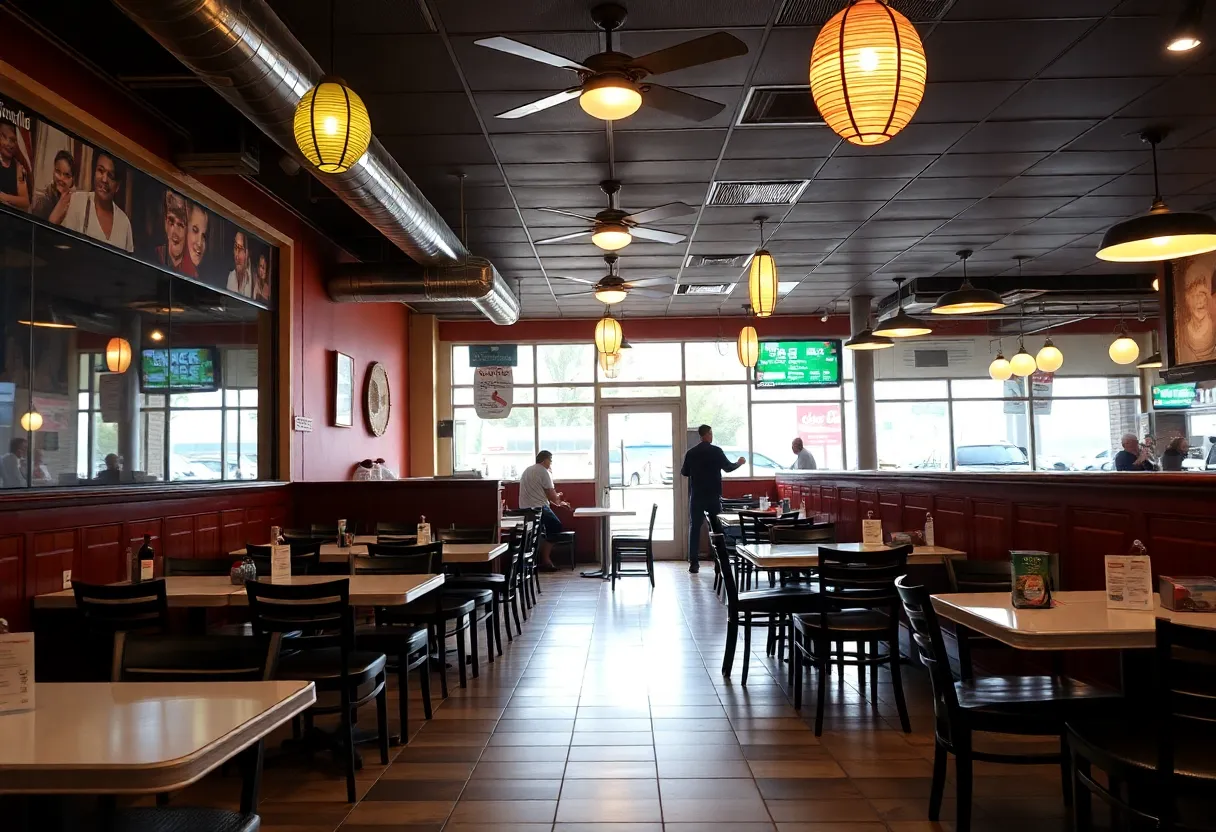
In the bustling city of Houston, Texas, restaurant owners catering to the vibrant Latino community are facing financial hardships due to ongoing immigration crackdowns. The enforcement measures are not only impacting customer traffic but are also hindering the essential workforce needed to keep these establishments running. The spotlight on the local restaurant scene reveals a troubling trend, with many businesses grappling to stay afloat amid uncertain times.
Significant Drop in Sales
Oscar Garcia Santaella, owner of Los Primos, reports catastrophic effects on his business, experiencing a 40% drop in sales. The taco joint, popular with local diners, primarily serves the Latino community, which has been significantly affected by recent immigration operations. This has resulted in a noticeable decline in customers who are now hesitant to dine out due to fear of deportation.
Industry-wide data from the Texas Restaurant Association reflect these struggles. In a survey conducted in the second quarter of 2025, 23% of members reported a loss of employees, while 21% noted a decrease in job applications and 16% experienced reduced customer numbers. This trend raises concerns over the future viability of many restaurants across the state.
Impact on Workforce and Economy
Recent estimates indicate that approximately 11 million individuals were living in the United States without legal documentation by 2022, with projections potentially rising to 14 million. This population plays a vital role in various economic sectors, contributing about $97 billion in taxes. Nearly half of these foreign-born workers identify as Latino, underscoring their significance within the labor market.
Community Fear Affects Business Operations
The increased presence of Immigration and Customs Enforcement (ICE) has fostered a climate of fear among these communities. Instances of heavy ICE operations have led to complete shutdowns for some restaurants, with one business reporting no sales during a week-long operation as patrons remained indoors in fear of encountering law enforcement. This problem extends beyond the restaurant industry, affecting agriculture and other sectors reliant on these workers.
Industry Responses and Advocacy
As the situation deteriorates, the Texas Restaurant Association has called for urgent attention to address worker shortages and bolster sales. Over 970 chefs, restaurant owners, and industry leaders have advocated for granting temporary work status to tax-paying immigrant workers, aiming to stabilize the workforce and improve economic conditions.
The owner of Birria Los Primos in Houston exemplifies the plight faced by many restaurateurs, having to close four food trucks due to a critical lack of staff and dwindling customer demand. Previously serving upwards of 40 orders a day, the business has plummeted to less than two orders daily, signaling a severe downturn that has the industry apprehensive about the future.
Future Implications for the Restaurant Industry
The Texas Restaurant Association emphasizes that the ongoing immigration enforcement challenges pose significant barriers to staffing solutions, prompting calls for reform. By advocating for work permits for long-term immigrant residents, the association aims to foster a sustainable environment that supports both workforce stability and community wellbeing.
As the restaurant industry grapples with these hurdles, potential repercussions on food prices and service quality are expected. Observers note that without prompt actions and policies to support workers, the culinary landscape in Houston and beyond may undergo significant adjustments in the coming months. With appropriate reforms, there is hope for a solution that nurtures workers while bolstering the economy.
Deeper Dive: News & Info About This Topic
- France 24
- Wikipedia: Immigration
- Gulf Shore Business
- Google Search: Texas eateries immigration raids
- Community Newspaper Group
- Google Scholar: Immigration raids Texas restaurants
- Indiana Gazette
- Encyclopedia Britannica: Immigration raids
- KHOU
- Google News: Texas restaurants workforce