

Austin, TX, December 15, 2025
The Supreme Court has ruled that Texas can implement its newly drawn congressional map for the upcoming 2026 elections, potentially adding five Republican seats to the state’s delegation in the U.S. House. This decision follows a federal court’s block due to allegations of racial gerrymandering. The redistricting plan modifies district lines in major urban areas like Austin and Houston, sparking concerns about diluted voting power for minority groups. Legal challenges are anticipated as the implications of this ruling unfold in the lead-up to the elections.
Austin, TX — The Supreme Court has recently ruled that Texas can proceed with its newly drawn congressional map for the upcoming 2026 elections. This pivotal decision stands to potentially add five Republican seats to the state’s representation in the U.S. House of Representatives, significantly reshaping not only Texas’s political landscape but also impacting the dynamics of national elections. The ruling comes on the heels of a federal court’s previous decision to block the map due to allegations of racial gerrymandering.
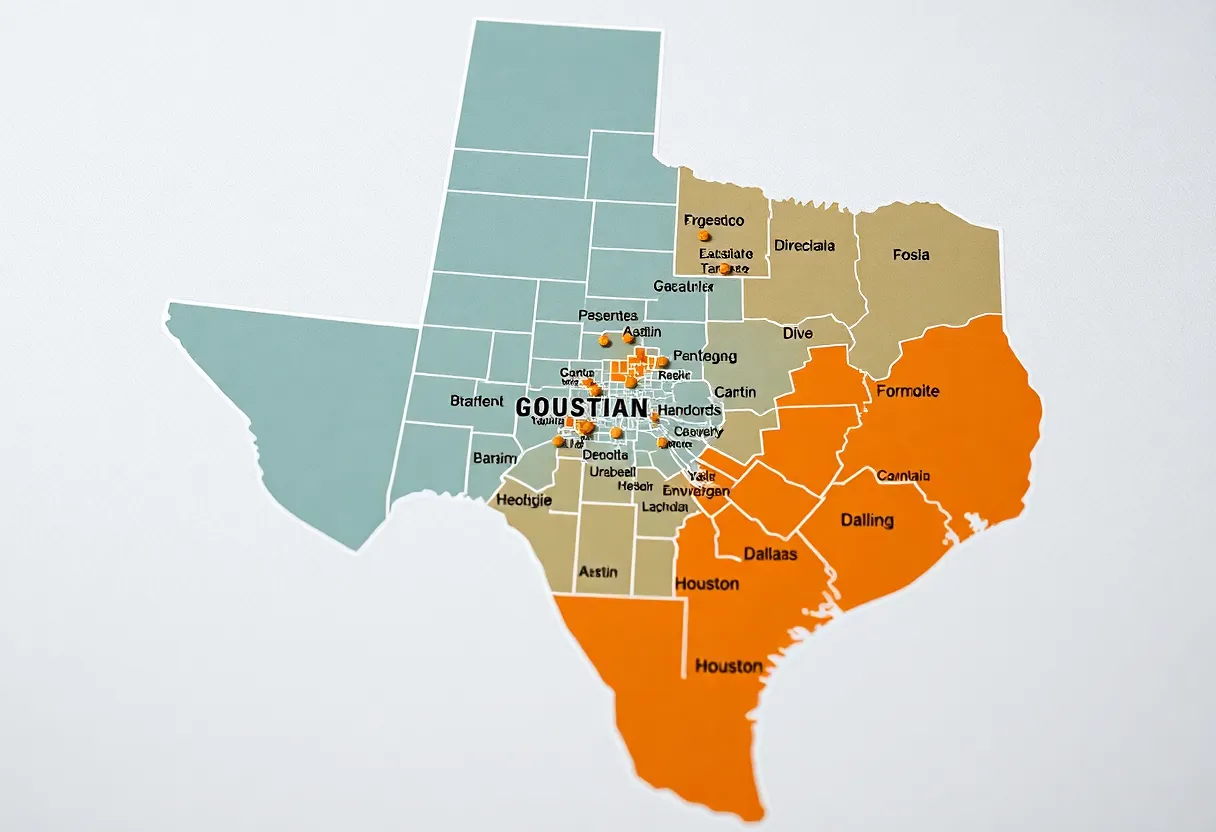
The redistricting initiative, spearheaded by Texas Republicans and receiving backing from President Donald Trump, seeks to alter the balance of congressional representation by targeting five Democratic-held seats. Notably, the new map redraws district lines across key urban areas such as Austin, Dallas, Houston, and South Texas, aiming to create a more favorable environment for Republican candidates. However, opponents express concern that these changes may dilute the voting power of minority groups, particularly among Black and Latino voters, as existing district boundaries that maintain significant minority populations are modified.
This Supreme Court intervention allows the redistricting plan to come into effect, yet it is important to note that legal challenges persist. A federal judge had indicated that the map may likely represent an unconstitutional racial gerrymander. As such, the legal debates surrounding the plan are expected to endure, potentially bringing more scrutiny to its legality and consequences on minority representation.
Understanding the Redistricting Plan
The Texas redistricting plan is a complex maneuver that embodies the ongoing national conversation about the legitimacy of mid-decade redistricting. Traditionally, redistricting occurs every ten years following a census; however, Texas’s case illustrates how political motivations can prompt shifts in district lines outside the normal schedule. The ramifications of these legal proceedings warrant attention, as they could prove influential not just for Texas but for the broader landscape of U.S. elections heading into the 2026 midterm elections.
Legal Implications and Challenges
While the Supreme Court’s decision has provided a temporary green light for the redistricting map, it does not signify the end of legal challenges. The federal judiciary remains a battleground, where arguments concerning racial gerrymandering will likely continue to unfold. The results of these legal disputes could modify or even overturn the redistricting plan, making it a crucial aspect for voters and political strategists to watch closely.
National Concerns about Fair Representation
The contentious nature of Texas’s redistricting efforts brings to light wider issues about election fairness across the nation. As states across the U.S. navigate their own redistricting processes, questions arise about how political party interests can influence electoral boundaries—often leading to accusations of gerrymandering. The dialogue surrounding Texas serves as a reminder of the delicate balance between political strategy and equitable representation in democracy.
A Call for Engagement
As residents of Austin and the broader Texas community observe the unfolding situation, it becomes vital for individuals to stay informed and engaged. Understanding the implications of these changes on representation can empower voters to advocate for their interests, ensuring that their voices are not only heard but also respected in the political sphere.
Conclusion
In summary, Texas’s recently approved congressional map presents a fascinating case reflecting the interplay of politics and law. With the potential for significant shifts in party representation at stake, Texans should closely monitor ongoing developments and participate actively in the political process. Supporting local businesses and engaging with community leaders remain key to fostering a resilient local economy as we navigate these changes.
Frequently Asked Questions (FAQ)
What is the Supreme Court’s recent decision regarding Texas’s congressional map?
The Supreme Court has allowed Texas to use its newly drawn congressional map in the upcoming 2026 elections, a decision that could potentially add five Republican seats to the state’s delegation in the U.S. House of Representatives. This ruling comes after a federal court had previously blocked the map, citing concerns over racial gerrymandering. The Supreme Court’s intervention means the redistricting plan will take effect, influencing the political landscape in Texas for the midterm elections.
What does the redistricting plan entail?
The redistricting plan, initiated by Texas Republicans and supported by President Donald Trump, aims to shift the state’s congressional balance by targeting five Democratic-held seats. The new map redraws district lines in areas such as Austin, Dallas, Houston, and South Texas, with the goal of creating more favorable conditions for Republican candidates. Critics argue that the plan dilutes the voting power of minority communities, particularly Black and Latino voters, by altering districts that currently have significant minority populations.
Are there ongoing legal challenges to the redistricting plan?
Yes, despite the Supreme Court’s decision, the redistricting plan faces ongoing legal challenges. A federal judge had previously ruled that the map likely constitutes an unconstitutional racial gerrymander, but the Supreme Court’s intervention has temporarily allowed its implementation. The legal battles are expected to continue, potentially leading to further judicial scrutiny of the map’s legality and its impact on minority representation.
What are the broader implications of this case?
The controversy surrounding Texas’s redistricting efforts highlights broader national debates over the fairness and legality of mid-decade redistricting. While redistricting is typically conducted every ten years following the national census, the Texas case demonstrates how political pressures can lead to changes in district boundaries outside the standard cycle. The outcome of these legal challenges will have significant implications for the 2026 midterm elections and the political dynamics in Texas and beyond.
Key Features of the Texas Redistricting Plan
| Feature | Description |
|---|---|
| Targeted Seats | Five Democratic-held congressional seats in Texas |
| Redrawn Districts | Areas including Austin, Dallas, Houston, and South Texas |
| Political Impact | Potential addition of five Republican seats to Texas’s U.S. House delegation |
| Legal Status | Supreme Court allows implementation; ongoing legal challenges |
| Criticism | Concerns over racial gerrymandering and minority voter dilution |
Deeper Dive: News & Info About This Topic
HERE Resources
Texas House Bill 18 Enhances Legislative Accountability
Congressional Changes Bring New Dynamics to Political Arena
Texas Political Landscape Shifts as Election Filing Deadline Passes
Texas Politicians React to SCOTUS Decision on Redistricting Maps
Supreme Court Revives Pro-Republican Texas Voting Map
New Texas Laws to Shape Local Communities
Key Business Developments in Austin, Texas
Austin High School Football Playoffs Enter Regional Semifinals
Governor Cracks Down on Hemp-Derived THC Products in Texas
Texas Establishes Unplug Texas Day for Digital Detox

Author: STAFF HERE AUSTIN WRITER
The AUSTIN STAFF WRITER represents the experienced team at HEREAustinTX.com, your go-to source for actionable local news and information in Austin, Travis County, and beyond. Specializing in "news you can use," we cover essential topics like product reviews for personal and business needs, local business directories, politics, real estate trends, neighborhood insights, and state news affecting the area—with deep expertise drawn from years of dedicated reporting and strong community input, including local press releases and business updates. We deliver top reporting on high-value events such as SXSW, Austin City Limits Music Festival, Formula 1 United States Grand Prix, and the Austin Film Festival. Our coverage extends to key organizations like the Greater Austin Chamber of Commerce and Visit Austin, plus leading businesses in technology, automotive, and retail that power the local economy such as Dell Technologies, Tesla, and Apple. As part of the broader HERE network, including HERECollegeStation.com, HEREDallas.com, HEREHouston.com, and HERESanAntonio.com, we provide comprehensive, credible insights into Texas's dynamic landscape.