

Austin, December 12, 2025
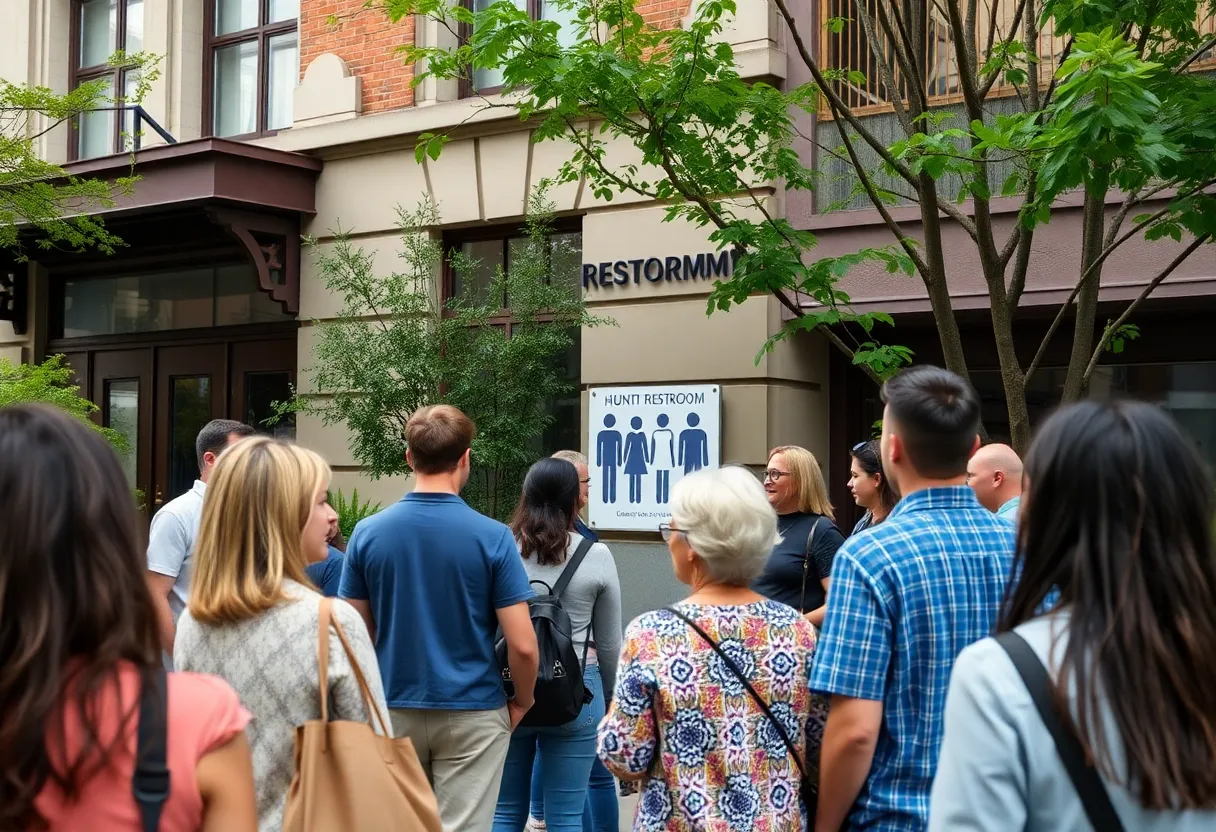
In response to Texas’s Senate Bill 8, Austin is proactively creating a gender-inclusive restroom plan to address the law’s enforcement issues. The legislation mandates restroom use based on sex assigned at birth, raising concerns for transgender and nonbinary individuals. City officials propose options to enhance inclusivity, including single-occupancy restrooms. Advocacy groups express alarm over potential discrimination. As Austin develops this plan, it aims to balance legal compliance and community safety, ensuring respect for all residents in public spaces.
Austin Develops Gender-Inclusive Restroom Plan Amid New State Law Enforcement Challenges
Austin, Texas – In response to the recent implementation of Senate Bill 8, known as the “bathroom bill,” the city of Austin is formulating a gender-inclusive restroom plan to navigate the law’s enforcement challenges. The legislation, effective December 4, 2025, mandates that individuals use public restrooms, locker rooms, and changing rooms corresponding to their sex assigned at birth. This requirement has raised concerns about its impact on transgender and nonbinary residents.
City’s Response to Senate Bill 8
Austin City Council Member Mike Siegel has proposed a resolution to explore options for making city restrooms more welcoming to the transgender community while adhering to state law. One consideration is the addition of single-occupancy restrooms in all city facilities, a move that could cost over $14 million. Another option involves converting existing restrooms into single-occupancy facilities, which would require significant time and an estimated $232.5 million investment. Siegel emphasized the city’s commitment to ensuring that all community members feel safe and respected in public spaces.
Enforcement and Legal Implications
The enforcement of Senate Bill 8 has been inconsistent. At the Texas State Capitol, transgender activists reported being asked for identification when attempting to use restrooms that align with their gender identity. While individuals are not personally fined under the law, government entities like the city of Austin face substantial penalties for non-compliance, starting at $25,000 for the first offense and escalating to $125,000 for subsequent violations. This financial burden has prompted city officials to seek solutions that balance legal compliance with inclusivity.
Background on Senate Bill 8
Senate Bill 8, signed into law by Governor Greg Abbott on September 22, 2025, restricts access to public restrooms, locker rooms, and changing rooms based on sex assigned at birth. The law applies to government buildings, public schools, and universities, prohibiting transgender individuals from using facilities that align with their gender identity. Supporters argue that the law is necessary for privacy and safety, while opponents contend it discriminates against transgender and nonbinary individuals. The law imposes fines on government entities for violations but does not penalize individuals directly.
Community and Advocacy Responses
Advocacy groups, including the ACLU of Texas, have expressed concern over the law’s potential to marginalize transgender individuals. They highlight the uncertainty surrounding enforcement and the possibility of increased harassment or discrimination in public spaces. The city’s efforts to develop a gender-inclusive restroom plan aim to mitigate these challenges and uphold the dignity and rights of all residents.
Looking Ahead
Austin’s initiative to create a gender-inclusive restroom plan reflects a proactive approach to addressing the complexities introduced by Senate Bill 8. As the city continues to develop and implement this plan, it underscores the ongoing dialogue between state legislation and local governance concerning the rights and protections of transgender and nonbinary individuals.
Frequently Asked Questions (FAQ)
What is Senate Bill 8?
Senate Bill 8, signed into law by Governor Greg Abbott on September 22, 2025, restricts access to public restrooms, locker rooms, and changing rooms based on sex assigned at birth. The law applies to government buildings, public schools, and universities, prohibiting transgender individuals from using facilities that align with their gender identity. Supporters argue that the law is necessary for privacy and safety, while opponents contend it discriminates against transgender and nonbinary individuals. The law imposes fines on government entities for violations but does not penalize individuals directly.
How is Austin responding to Senate Bill 8?
Austin City Council Member Mike Siegel has proposed a resolution to explore options for making city restrooms more welcoming to the transgender community while adhering to state law. One consideration is the addition of single-occupancy restrooms in all city facilities, a move that could cost over $14 million. Another option involves converting existing restrooms into single-occupancy facilities, which would require significant time and an estimated $232.5 million investment. Siegel emphasized the city’s commitment to ensuring that all community members feel safe and respected in public spaces.
What are the enforcement challenges of Senate Bill 8?
The enforcement of Senate Bill 8 has been inconsistent. At the Texas State Capitol, transgender activists reported being asked for identification when attempting to use restrooms that align with their gender identity. While individuals are not personally fined under the law, government entities like the city of Austin face substantial penalties for non-compliance, starting at $25,000 for the first offense and escalating to $125,000 for subsequent violations. This financial burden has prompted city officials to seek solutions that balance legal compliance with inclusivity.
What is the background of Senate Bill 8?
Senate Bill 8, signed into law by Governor Greg Abbott on September 22, 2025, restricts access to public restrooms, locker rooms, and changing rooms based on sex assigned at birth. The law applies to government buildings, public schools, and universities, prohibiting transgender individuals from using facilities that align with their gender identity. Supporters argue that the law is necessary for privacy and safety, while opponents contend it discriminates against transgender and nonbinary individuals. The law imposes fines on government entities for violations but does not penalize individuals directly.
What are the community and advocacy responses to Senate Bill 8?
Advocacy groups, including the ACLU of Texas, have expressed concern over the law’s potential to marginalize transgender individuals. They highlight the uncertainty surrounding enforcement and the possibility of increased harassment or discrimination in public spaces. The city’s efforts to develop a gender-inclusive restroom plan aim to mitigate these challenges and uphold the dignity and rights of all residents.
FAQ Schema in JSON-LD Format
{
  "@context": "https://schema.org",
  "@type": "FAQPage",
  "mainEntity": [
    {
      "@type": "Question",
      "name": "What is Senate Bill 8?",
      "acceptedAnswer": {
        "@type": "Answer",
        "text": "Senate Bill 8, signed into law by Governor Greg Abbott on September 22, 2025, restricts access to public restrooms, locker rooms, and changing rooms based on sex assigned at birth. The law applies to government buildings, public schools, and universities, prohibiting transgender individuals from using facilities that align with their gender identity. Supporters argue that the law is necessary for privacy and safety, while opponents contend it discriminates against transgender and nonbinary individuals. The law imposes fines on government entities for violations but does not penalize individuals directly."
      }
    },
    {
      "@type": "Question",
      "name": "How is Austin responding to Senate Bill 8?",
      "acceptedAnswer": {
        "@type": "Answer",
        "text": "Austin City Council Member Mike Siegel has proposed a resolution to explore options for making city restrooms more welcoming to the transgender community while adhering to state law. One consideration is the addition of single-occupancy restrooms in all city facilities, a move that could cost over $14 million. Another option involves converting existing restrooms into single-occupancy facilities, which would require significant time and an estimated $232.5 million investment. Siegel emphasized the city's commitment to ensuring that all community members feel safe and respected in public spaces."
      }
    },
    {
      "@type": "Question",
      "name": "What are the enforcement challenges of Senate Bill 8?",
      "acceptedAnswer": {
        "@type": "Answer",
        "text": "The enforcement of Senate Bill 8 has been inconsistent. At the Texas State Capitol, transgender activists reported being asked for identification when attempting to use restrooms that align with their gender identity. While individuals are not personally fined under the law, government entities like the city of Austin face substantial penalties for non-compliance, starting at $25,000 for the first offense and escalating to $125,000 for subsequent violations. This financial burden has prompted city officials to seek solutions that balance legal compliance with inclusivity."
      }
    },
    {
      "@type": "Question",
      "name": "What is the background of Senate Bill 8?",
      "acceptedAnswer": {
        "@type": "Answer",
        "text": "Senate Bill 8, signed into law by Governor Greg Abbott on September 22, 2025, restricts access to public restrooms, locker rooms, and changing rooms based on sex assigned at birth. The law applies to government buildings, public schools, and universities, prohibiting transgender individuals from using facilities that align with their gender identity. Supporters argue that the law is necessary for privacy and safety, while opponents contend it discriminates against transgender and nonbinary individuals. The law imposes fines on government entities for violations but does not penalize individuals directly."
      }
    },
    {
      "@type": "Question",
      "name": "What are the community and advocacy responses to Senate Bill 8?",
      "acceptedAnswer": {
        "@type": "Answer",
        "text": "Advocacy groups, including the ACLU of Texas, have expressed concern over the law's potential to marginalize transgender individuals. They highlight the uncertainty surrounding enforcement and the possibility of increased harassment or discrimination in public spaces. The city's efforts to develop a gender-inclusive restroom plan aim to mitigate these challenges and uphold the dignity and rights of all residents."
      }
    }
  ]
}
Key Features of Austin’s Gender-Inclusive Restroom Plan
| Feature | Description |
|---|---|
| Single-Occupancy Restrooms | Adding single-occupancy restrooms in all city facilities to accommodate all individuals, estimated cost over $14 million. |
| Conversion of Existing Facilities | Converting existing restrooms into single-occupancy facilities, requiring significant time and an estimated $232.5 million investment. |
| Legal Compliance | Ensuring adherence to Senate Bill 8 while maintaining inclusivity for transgender and nonbinary residents. |
| Community Engagement | Engaging with community members and stakeholders to develop a plan that respects diverse needs and perspectives. |
Deeper Dive: News & Info About This Topic
HERE Resources
Texas Bathroom Bill Sparks Debate on Individual Rights
Assault at Barton Springs Investigated as Hate Crime