
News Summary
The Dallas-Fort Worth area is experiencing significant growth in its Indian-American community, particularly within the Collin County region. This growth is marked by an increase in Indian restaurants, businesses, and a rising number of skilled workers in the technology sector, predominantly on H-1B visas. The economic ties between Texas and Asia are strengthening, alongside a notable expansion in the Indian-American population. This community contributes significantly to local businesses and cultural vibrancy while also addressing the challenges of adapting to a new environment.
Texas: Dallas-Fort Worth Embraces Indian-American Culture and Business Growth
The Dallas-Fort Worth (D-FW) region in Texas is rapidly emerging as a vibrant center for Indian-American culture and economic activity. With an abundance of Indian restaurants and retail businesses making their mark, particularly in Collin County, the area is transforming into a hub of cultural diversity and strong economic growth.
A Flourishing Indian Business Scene
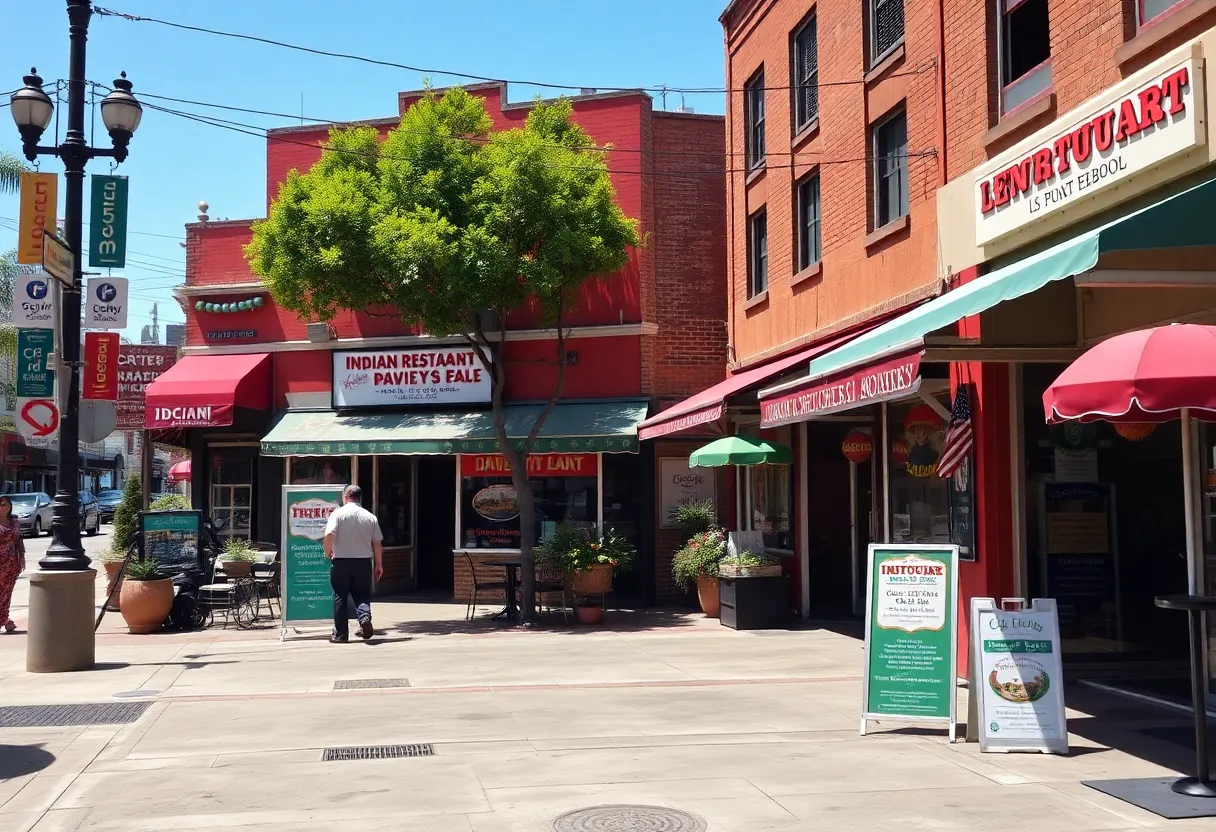
D-FW is experiencing a culinary and retail renaissance, with the influx of Indian eateries and shopping establishments reshaping the region’s gastronomic landscape. According to the U.S.-India Chamber of Commerce, this trend of expanding Indian businesses may indicate positive economic momentum in the area. More Indian cuisine options point to rising consumer interest and economic vitality.
Skilled Workforce Increasing
The D-FW area is also becoming a magnet for skilled labor, largely due to thriving technology industries. A significant number of employees in the region hold H-1B visas, with a majority originating from India. As reported, India leads as the top source country for H-1B workers, and the D-FW area ranks among the top five metropolitan regions nationwide for the number of H-1B visa holders. In Texas, the city of College Station boasts the highest density of H-1B approvals, while D-FW surpasses Austin in total visa workers, marking a notable shift in the tech labor landscape.
Investment Outlook
The financial outlook for the D-FW area remains optimistic, highlighted by the recent investment from Kintetsu Group Holdings, which is contributing $117.5 million to the construction of the Miyako Hybrid Hotel in Plano. This reflects a broader trend of robust economic ties between Texas and Asia, valued at approximately $31 billion, emphasizing a prosperous business environment.
Population Growth and Demographics
The Indian-American community in Texas is witnessing rapid growth, establishing itself as the most prominent subgroup among Asian-Americans. Population data reveals a surge from 230,842 Indian-Americans in 2010 to 434,221 in 2020, which constitutes approximately 1.5% of the state’s demographic. Within D-FW, there are around 220,000 Indian-Americans, with Collin County seeing an increase from 3.8% to 7.5% in just a decade.
Community Impact
In Dallas County, Indian-Americans represent 2.4% of the population, while Tarrant County records 1.1%. Between 2015 and 2020, major cities such as Fort Worth, Dallas, and Plano welcomed nearly 14,189 new Indian-American residents. Many of these individuals contribute significantly to employment in STEM fields, with over half working in sectors like computer science, management, and healthcare.
Economic Contributions
The impact of Indian-Americans on the local economy is significant, accounting for 5% of all businesses in Collin, Denton, Dallas, and Tarrant counties. They represent a substantial one-third of all Asian-owned businesses in these regions. The average income of Indian-Americans in D-FW stands at an impressive $58,879, with 41% earning $150,000 or more, highlighting their economic contributions to the community.
Challenges and Community Support
Despite the successes, many Indian-American families face challenges while adapting to life in the U.S., especially children navigating new cultural landscapes. Organizations, such as the India Association of North Texas, play a critical role in helping these families adjust culturally. There is also a noticeable increase in political engagement within the Indian-American community, with efforts aimed at fostering voter registration and increasing representation.
Future Prospects
The future appears promising for Indian-Americans in Dallas-Fort Worth, marked by young families, rich cultural traditions, and active involvement in civic matters. As local leaders work to ensure accessibility and community integration, the trajectory for this diverse community in D-FW remains bright.
Deeper Dive: News & Info About This Topic
- Dallas News: Asia in D-FW
- Wikipedia: Dallas
- Wall Street Journal: Dallas Growth
- Google Search: Dallas Fort Worth growth
- Community Impact: Desi Mandi
- Google Scholar: Dallas Fort Worth Asian demographics
- NBC DFW: Tariffs on Wedding Dresses
- Encyclopedia Britannica: Dallas
- Simple Flying: DFW Airport Asian Routes
- Google News: Dallas Fort Worth Asian community


Author: STAFF HERE AUSTIN WRITER
The AUSTIN STAFF WRITER represents the experienced team at HEREAustinTX.com, your go-to source for actionable local news and information in Austin, Travis County, and beyond. Specializing in "news you can use," we cover essential topics like product reviews for personal and business needs, local business directories, politics, real estate trends, neighborhood insights, and state news affecting the area—with deep expertise drawn from years of dedicated reporting and strong community input, including local press releases and business updates. We deliver top reporting on high-value events such as SXSW, Austin City Limits Music Festival, Formula 1 United States Grand Prix, and the Austin Film Festival. Our coverage extends to key organizations like the Greater Austin Chamber of Commerce and Visit Austin, plus leading businesses in technology, automotive, and retail that power the local economy such as Dell Technologies, Tesla, and Apple. As part of the broader HERE network, including HERECollegeStation.com, HEREDallas.com, HEREHouston.com, and HERESanAntonio.com, we provide comprehensive, credible insights into Texas's dynamic landscape.