

Austin, Texas, August 15, 2025
News Summary
Austin’s development pipeline has expanded significantly, reaching a milestone of 2.7 million square feet of construction, contributing to a vibrant urban landscape. The University of Texas is re-evaluating its real estate strategy in response to growing competition from tech companies. Notable projects include potential caps on Interstate 35 and a mixed-use development that promises 300 affordable housing units. These initiatives aim to address housing challenges while fostering community engagement. The ongoing growth reflects a transformative period for Austin’s economy and development landscape.
Austin, Texas Continuously Expands Development Pipeline with Bold Projects
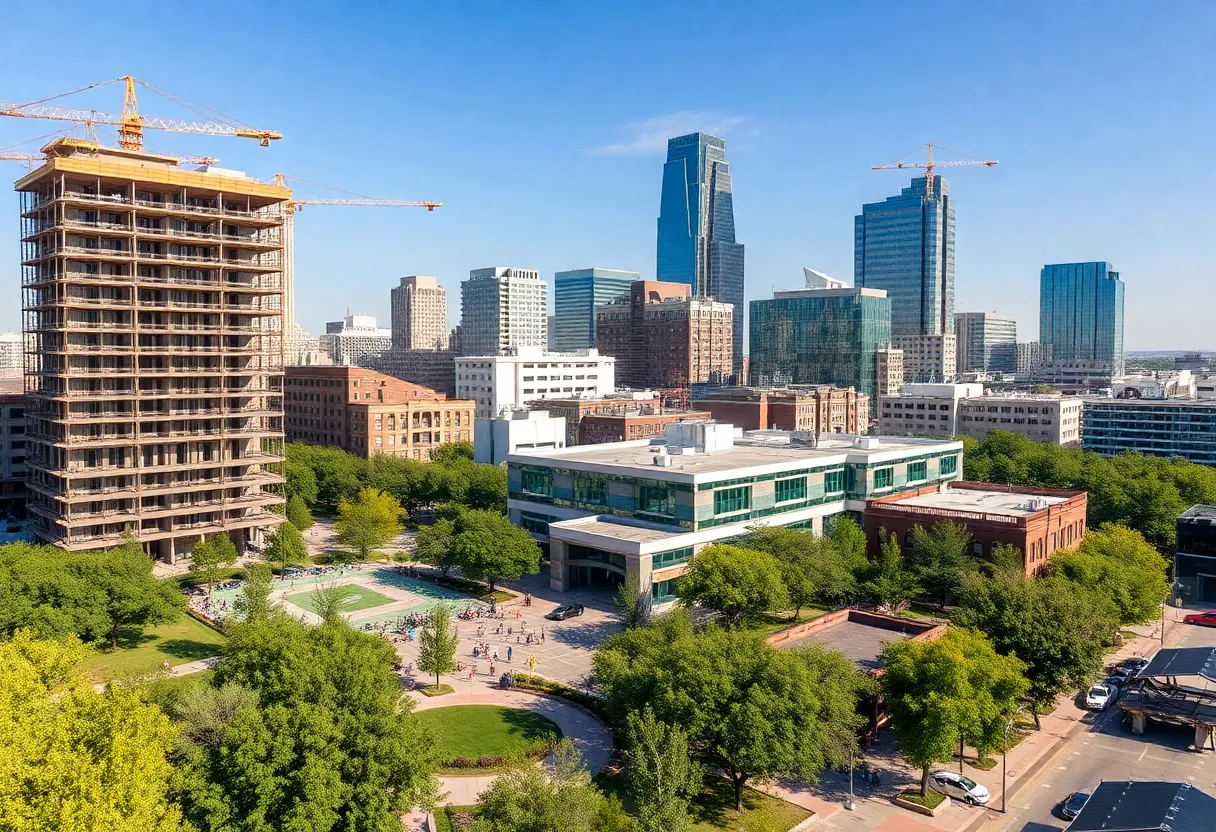
Austin’s development pipeline has reached a significant milestone of 2.7 million square feet, marking one of the highest levels of construction activity since 2007. This figure accounts for 2.2% of the city’s existing market inventory, highlighting an increasingly active developmental landscape.
The newly available data pulls from recent discussions at an Urban Land Institute Austin meeting, wherein interim University of Texas President Jim Davis discussed the university’s evolving role within the rapidly changing city. Historically, the University of Texas (UT) has been a major player in Austin’s development and its employment market. However, recent competition from prominent tech companies and substantial infrastructure projects poses new challenges for the university.
Amid these changes, UT has encountered difficulties in attracting contractors and fostering partnerships with local developers, raising concerns about its ongoing status as one of the city’s top employers. This situation has prompted the university to consider a significant overhaul of its real estate strategy to better adapt to the urban environment.
Plans for Urban Development
One key strategy discussed involves potential plans to cap portions of Interstate 35 near the university campus. The aim is to reconnect the physical and cultural divide created by the highway. These cap plans, however, remain in the preliminary phase and are currently lacking firm commitments for necessary funding, design, or governance structures.
Future progress regarding these caps will heavily depend on collaboration with the Texas Department of Transportation (TxDOT) and alignment with the city’s construction schedule. Davis underscored the importance of UT taking a more proactive stance in urban planning, particularly regarding developments along the campus edge.
Housing Initiatives and Partnerships
In line with its long-term ambitions, the university seeks ways to expand its student housing options beyond the current 9,000 available student beds. Exploring public/private partnerships to provide additional housing units is among UT’s initiatives. These discussions aim to alleviate the housing affordability crisis faced by students, which may include implementing a housing stipend as part of financial aid packages to ease housing costs.
Additionally, conversations with Mayor Kirk Watson have initiated talks regarding potential development on the Brackenridge tract, signaling further growth opportunities for the university and the surrounding area.
Investment and Partnership Opportunities
In a noteworthy development, UT has successfully raised $1.4 billion in funding for the Montopolis property, designated to support future semiconductor manufacturing projects. This strategic move underscores the university’s focus on becoming an active participant in regional economic planning, particularly within advanced industries such as semiconductors.
The Montopolis site is expected to foster collaborations among industry, workforce, and research institutions, helping to strengthen education-to-employment pipelines in the region.
Commercial Development Amid Community Focus
In addition to the university’s plans, local developer Texas Design and Construction has announced its new mixed-use project slated to break ground in early 2024. The development will feature 14 diverse retail spaces targeted at supporting local businesses while fostering community engagement. Moreover, the project includes 300 affordable housing units, a vital initiative aimed at addressing Austin’s ongoing housing affordability challenges.
The mixed-use development also prioritizes sustainable design practices, incorporating energy-efficient systems and community-oriented amenities to ensure accessibility and enhance the living experience for both residents and visitors.
Texas Design and Construction maintains a robust commitment to building communities, focusing not just on providing physical structures, but also on creating a cohesive and supportive environment for those who live and work in Austin.
Conclusion
The ongoing development initiatives in Austin, particularly those spearheaded by UT and local developers, represent a crucial response to the city’s economic evolution. The combination of ambitious housing projects, innovative strategies for urban connectivity, and a focus on community engagement is setting the stage for a transformative period for Austin’s landscape.
FAQs
What is the current development pipeline size in Austin?
The current development pipeline in Austin stands at 2.7 million square feet.
What role does the University of Texas play in the city’s development?
The University of Texas has historically been a major builder and employer in Austin but is now adapting to competition from tech giants and large infrastructure projects.
What housing initiatives are being considered by the University of Texas?
The University of Texas aims to expand its housing options by potentially adding a housing stipend to financial aid and exploring public/private partnerships for more student housing.
What new community development projects are occurring in Austin?
Texas Design and Construction is launching a mixed-use development that includes 14 retail spaces and 300 affordable housing units, aiming to support local businesses and address housing affordability.
Key Features
| Feature | Details |
|---|---|
| Current Development Pipeline | 2.7 million square feet |
| Percentage of Market Inventory | 2.2% |
| University of Texas Funding for Montopolis | $1.4 billion |
| Affordable Units in New Development | 300 units |
| Break Ground Date for Mixed-Use Development | Early 2024 |
| Current Student Beds Available | 9,000 |
Deeper Dive: News & Info About This Topic
HERE Resources
Brownsville’s $100 Million Manufacturing Investment
New Student Housing Tower Icon Completed in Austin
Intermittent Closures Expected for Austin’s Butler Hike and Bike Trail
Apple Announces $100 Billion Investment in U.S. Manufacturing
Intel’s CEO Faces Pressure Following Trump’s Comments
NRG Energy Secures Major Loan for New Natural Gas Power Plant
Houston to Welcome New Power Plant: A Bright Future Ahead
High-Tech Hotels to Transform Mansfield’s Staybolt Street District
Samsung Electronics Struggles Amidst Texas Expansion
Waterline Tower Set to Redefine Austin’s Skyline
Additional Resources
- CoStar News
- Wikipedia: Development in Austin, Texas
- BDC Network
- Google Search: Austin Texas Development
- Austin Monitor
- Google Scholar: University of Texas Development
- CoStar News
- Encyclopedia Britannica: University of Texas Development
- Community Impact
- Google News: EastVillage Development Austin