

Austin, Texas, July 24, 2025
News Summary
Students at the University of Texas at Austin are grappling with anxiety following the repeal of the Texas Dream Act, which previously allowed undocumented students to access in-state tuition. The Department of Justice ruled the act unconstitutional, requiring students to prove their lawful presence by July 24. This change raises concerns about educational access and potential financial burdens on affected students. Advocacy groups are mobilizing to challenge the ruling and restore the protections offered by the Dream Act, emphasizing the need for educational equity.
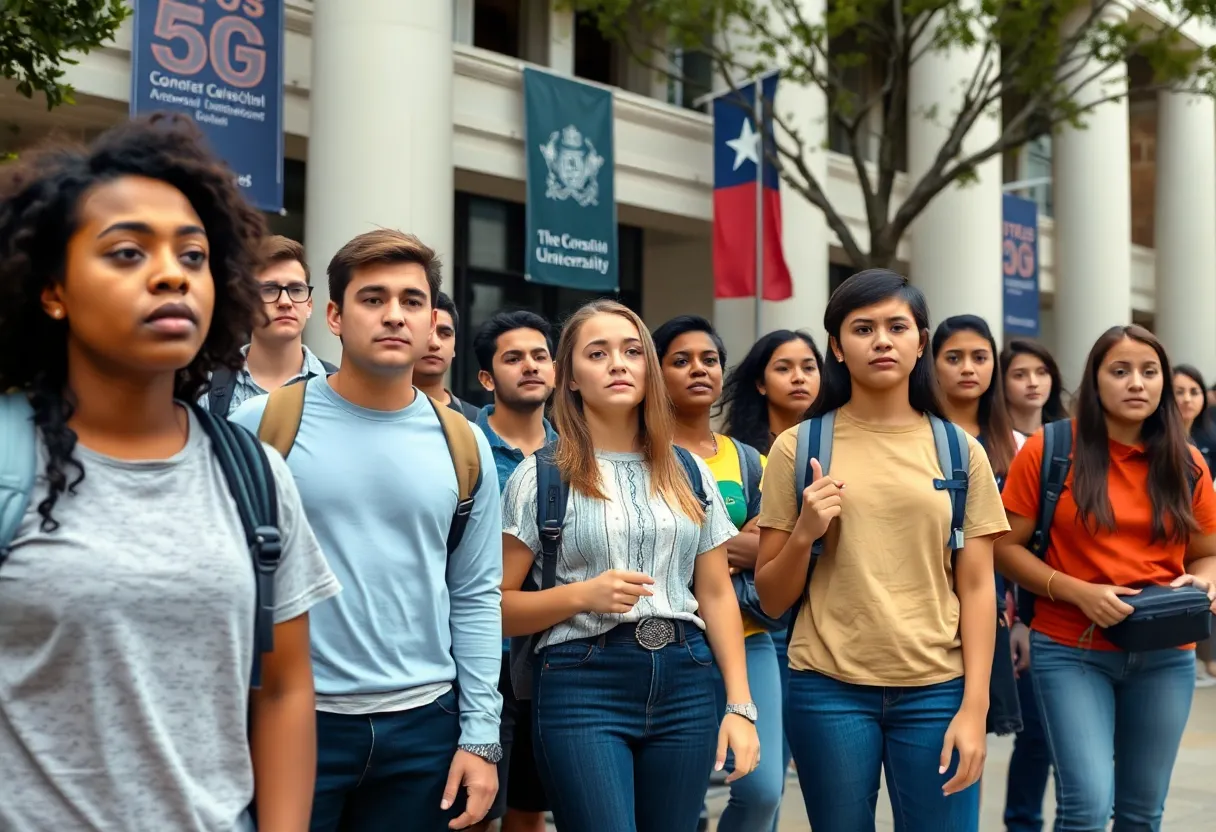
Austin, Texas – Students at the University of Texas at Austin and across the state are facing significant uncertainty following the repeal of the Texas Dream Act. This law previously allowed undocumented students who had lived in Texas for at least three years preceding high school graduation to access in-state tuition and financial aid. The recent change was prompted by a ruling from the Department of Justice declaring the Dream Act unconstitutional and conflicting with federal immigration law.
As part of the new regulations, a letter from the University of Texas at Austin, dated July 11, outlined a requirement for students to provide documentation proving their “lawful presence” in the country by July 24. This directive has left many students, including members of marginalized communities, feeling vulnerable about their academic futures. One such student, Mariel, who emigrated from Mexico when she was just over one year old, voiced her fears about how these changes could jeopardize her pursuit of a degree in the medical field. She comes from a low-income family and is now confronted with the possibility of having to abandon her education or, worse, relocating back to Mexico.
The University of Texas has been criticized for its lack of detailed guidance on how the verification of residency and legal status will be conducted and the potential penalties for failing to meet the documentation deadline. As this situation unfolds, a group consisting of teachers, legal experts from the ACLU of Texas, and educational representatives held a virtual press conference discussing the widespread anxiety affecting students regarding their future education and careers.
Legal experts such as Kystal Gomez from the Texas Immigration Law Council emphasized the pressing need for clarity and guidance as universities navigate this unchartered territory. The confusion over the definitions of “lawful presence” versus “lawful status” has raised numerous questions among students and education advocates.
The implications of the Texas Dream Act’s repeal extend beyond individual students. Financial estimates indicate that the removal of this educational support could nearly double tuition costs for undocumented students attending public colleges in Texas. Moreover, trustees at Austin Community College have raised alarms about the anticipated financial loss that the college could incur as a direct result of this policy change.
Legal organizations and individual advocates, including Oscar Silva, are actively pursuing lawsuits aimed at reinstating the Dream Act, arguing that it is vital for ensuring educational equity among all students in Texas. A federal court’s ruling declaring the Dream Act unconstitutional has been met with resistance from these advocates, further complicating the situation for affected students.
If these changes remain in effect, Texas could potentially see an annual economic impact of approximately $461 million due to decreased enrollment and financial instability among undocumented students. Historically, attempts to repeal the Dream Act at the state level have not succeeded. Advocacy groups are expected to continue their efforts to combat current legal maneuvers against the law.
The University of Texas System will be collecting necessary documentation to verify students’ lawful presence, implementing an urgent and complex process that poses significant challenges and uncertainties for the student body. As the July 24 deadline looms, many students are left anxiously awaiting further information from the university regarding their positions.
FAQ
What is the Texas Dream Act?
The Texas Dream Act allowed undocumented students to pay in-state tuition if they lived in Texas for three years before graduating high school.
Why was the Texas Dream Act repealed?
The Dream Act was deemed unconstitutional by the Department of Justice, citing conflicts with federal immigration law.
What are the new requirements for students at UT Austin?
Students must provide documentation proving their “lawful presence” in the U.S. by July 24 to continue receiving in-state tuition rates.
What could be the financial implications of the repeal?
Reinstatement of tuition costs for undocumented students could result in an increase of nearly twice the current rates, with an estimated loss of $461 million for Texas annually.
Are there legal efforts to restore the Dream Act?
Yes, several legal organizations and advocates are attempting to file lawsuits to restore the Dream Act, highlighting its importance for educational equity.
| Feature | Description |
|---|---|
| Texas Dream Act | Allowed undocumented students to access in-state tuition and financial aid. |
| Repeal Reason | Declared unconstitutional by the Department of Justice. |
| New Requirements | Proof of “lawful presence” by July 24 to maintain in-state tuition eligibility. |
| Financial Impact | Potential tuition doubling; estimated $461 million economic loss annually for Texas. |
| Legal Actions | Numerous lawsuits being filed to restore the Dream Act. |
Deeper Dive: News & Info About This Topic
HERE Resources
U.S. Justice Department Sues Texas Over Dream Act
Jim Davis Announced as Sole Finalist for UT Austin Presidency
University of Texas System Selects Finalists for Leadership Roles
DOJ Sues Texas Over Dream Act and In-State Tuition Rates
Star-Studded Benefit Concert for Flood Relief in Texas
Miranda Lambert and Parker McCollum to Host Benefit Concert
New Citizenship Requirement at University of Texas
University of Texas System’s New Tuition Documentation Requirement
Brownsville Launches Startup Texas Accelerator Program
Celebrating 13 Years of DACA: A Big Win for Texas!
Additional Resources