
Tesla Robotaxi Launch and Safety Concerns: A Marketing Perspective
As the Chief Marketing Officer for a major Digital Marketing Company, we work with all sorts of product launches. The golden rule of a launch, whether it’s a political campaign or something like a Robotaxi, is to craft the message and control the news flow (if necessary, to “create” your own press). As the popular saying goes, “You only have one chance to make a first impression.” Accordingly, we want to make absolutely sure that we control that first ‘look’—that’s what Public Relations is all about! Tesla’s Robotaxi launch in Austin, Texas, on June 22, 2025, is a textbook case of a high-stakes rollout where narrative control has been both a triumph and a challenge. With viral videos of erratic driving and regulatory scrutiny dominating headlines, the launch has sparked heated debate. Let’s dive into the perspectives of all interested parties—Tesla, participants, government and regulatory bodies, and the greater Austin community—while examining the social media buzz and addressing key concerns in a structured FAQ.
Tesla’s Perspective: Innovation Meets Narrative Challenges
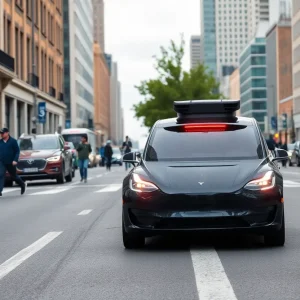
For Tesla, the Robotaxi launch was a pivotal moment to showcase its unsupervised Full Self-Driving (FSD) technology, a decade-long ambition of CEO Elon Musk. The company rolled out 10–20 Model Y vehicles in a geofenced area of South Austin, offering $4.20 flat-rate rides to a select group of investors, influencers, and enthusiasts. Musk hailed the launch as a “culmination of a decade of hard work,” emphasizing Tesla’s AI-driven approach, which relies on cameras rather than costly sensors, to undercut competitors like Waymo. Tesla’s PR strategy leaned heavily on positive testimonials from invited riders, with influencers posting videos of smooth rides to amplify excitement. However, the company’s narrative was disrupted by viral videos showing robotaxis speeding, veering into wrong lanes, and braking erratically. Tesla has remained largely silent on these incidents, declining to comment publicly, which has allowed critics to fill the void. From a marketing standpoint, Tesla’s failure to proactively address safety concerns has ceded control of the narrative, underscoring the need for a robust crisis communication plan.
Participants’ Perspective: Excitement Tempered by Concerns
Participants, primarily Tesla investors and enthusiasts invited to the pilot, were initially thrilled. Influencers like Sawyer Merritt shared viral videos of rides to local spots, praising the app’s ease and the technology’s potential to revolutionize ride-hailing. These early adopters saw the launch as a milestone, with some, like Wedbush Securities analyst Dan Ives, calling it a “huge success” despite “growing pains.” However, not all feedback was glowing. Videos from participants and observers, including critic Ed Niedermeyer, documented issues like robotaxis dropping passengers in the middle of roads or failing to navigate complex intersections. One rider reported a safety monitor intervening to avoid a collision with a UPS truck. These mixed experiences highlight a classic marketing challenge: while loyalists amplify the brand, unfiltered participant feedback on social media can undermine the curated narrative if not managed carefully.
Government and Regulatory Perspective: Safety First
The National Highway Traffic Safety Administration (NHTSA) swiftly engaged Tesla after videos surfaced on June 23, 2025, showing robotaxis violating traffic laws. The agency is reviewing incidents like speeding (e.g., 39 mph in a 35 mph zone) and driving on the wrong side of the road, building on an existing investigation into Tesla’s FSD technology. Texas lawmakers, including Representative Vikki Goodwin, urged Tesla to delay the launch until September 1, 2025, when new autonomous vehicle regulations take effect. These rules require registration, safety standards, and emergency protocols. Austin officials, unable to regulate autonomous vehicles under current state law, have expressed concerns about Tesla’s safety track record, with City Council Member Vanessa Fuentes advocating for caution. The regulatory scrutiny underscores a critical PR lesson: launches in regulated industries must anticipate and address compliance concerns to maintain public and governmental trust.
Greater Austin Community: Opportunity vs. Risk
Austin, a tech hub and Tesla’s home city, is both excited and wary about the Robotaxi pilot. The community sees economic potential in Tesla’s innovation, with the launch reinforcing Austin’s status as a testing ground for autonomous vehicles alongside Waymo, Zoox, and others. Local businesses, like Frazier’s Long and Low bar, benefited from the buzz of robotaxi rides. However, residents have voiced concerns about safety and traffic disruptions, with city officials logging complaints about robotaxis blocking roads and ignoring police directives in recent years. Social media posts from Austinites reflect a split sentiment: some embrace the futuristic vision, while others fear accidents and question Tesla’s readiness. From a marketing perspective, Tesla’s challenge is to win over the local community by addressing these concerns transparently, perhaps through town halls or safety demonstrations, to build trust.
Social Media Buzz: A Double-Edged Sword
Social media, particularly X, has been a battleground for the Robotaxi narrative. Below are key posts reflecting the polarized sentiment:
- Elon Musk (@elonmusk, June 22, 2025): “The @Tesla_AI robotaxi launch begins in Austin this afternoon with customers paying a $4.20 flat fee!” This post set an optimistic tone, generating excitement among Tesla fans.
- Gordon Johnson (@GordonJohnson19, June 24, 2025): “Hey @NHTSAgov thoughts on this summary of $TSLA’s robotaxi launch in Austin? There were 2 safety critical errors… You ok w/ lives being endangered for a stock pump?” This critical post highlights safety concerns and regulatory pressure.
- PiQ Suite (@PiQSuite, June 25, 2025): “Tesla Robotaxi Test in Austin Raises Safety Red Flags… Experts alarmed by public missteps; Austin officials, regulators closely [monitoring].” This post amplifies concerns from experts and local authorities.
- Express Drives (@ExpressDrives, June 26, 2025): “As @RealDanODowd points out, Robotaxis made critical errors on day one and having thousands of Tesla Robotaxis could be dangerous.” This post reflects growing public safety fears.
The X chatter shows Tesla’s challenge in controlling the narrative. While Musk’s posts drove initial hype, critical voices quickly gained traction, underscoring the need for proactive PR to counter negative sentiment.
Conclusion: Lessons in Launch PR
Tesla’s Robotaxi launch is a case study in the highs and lows of product rollouts. The company successfully generated buzz but struggled to maintain narrative control as safety concerns dominated headlines. For marketers, the lesson is clear: anticipate risks, engage regulators early, and address community concerns transparently. By doing so, brands can ensure that their first impression is not only impactful but also enduringly positive.
FAQ: Tesla Robotaxi Launch and Safety Concerns
| Question | Tesla’s Response | Participants’ View | Government/Regulatory Stance | Greater Austin Community |
|---|---|---|---|---|
| Is the Robotaxi technology safe? | Emphasizes “super paranoid” focus on safety, with human monitors in vehicles. Silent on specific incidents. | Mixed: Enthusiasts praise innovation; some report unsafe behaviors like erratic braking. | NHTSA investigating violations; lawmakers urge delay until new safety laws apply. | Concerned about accidents and traffic disruptions based on past autonomous vehicle issues. |
| What are the main safety issues? | No public comment on incidents like speeding or wrong-lane driving. | Videos show speeding, wrong-lane driving, and sudden braking, with one intervention to avoid a crash. | NHTSA cites speeding, wrong-lane driving, and curb-jumping as potential violations. | Worried about blocked roads and inability to follow police directives, per city reports. |
| How is the launch regulated? | Claims compliance with current laws; no response to calls for delay. | Participants unaware of regulatory details, focused on experience. | Texas law limits city regulation; new rules effective September 2025 require permits and standards. | Frustrated by lack of local control, wants stricter oversight. |
| What’s the economic impact? | Sees Robotaxis as key to future valuation, cutting costs vs. competitors. | Investors see stock growth potential; enthusiasts tout ride-hailing revolution. | Neutral, focused on safety compliance over economic benefits. | Excited about tech hub status but wary of safety risks outweighing economic gains. |
| How can public trust be built? | Relies on influencer testimonials and Musk’s vision to drive excitement. | Suggests more transparency on limitations and safety measures. | Calls for collaboration with regulators and clear safety data. | Wants community engagement, like town halls, to address concerns. |

Author: Todd Hunnicutt
Todd Hunnicutt is a dynamic media personality, entrepreneur, coach, and Chief Marketing Officer at Real Internet Sales. Renowned for his technology expertise, he's been featured in the New York Times, National Geographic, and major news outlets. As a nationally syndicated technology writer, Todd is a sought-after voice in marketing, ai, entrepreneurship, and economics, frequently interviewed by industry publications. A proud South Carolina native, he cherishes outdoor adventures, BBQ, Tuesday family dinners, and Sunday church services. A passionate baseball fan, Todd enjoys games alongside his wife, Elizabeth, whose umpire-call critiques rival instant replay. With an extensive background, he's collaborated with Fortune 500 companies, nonprofit startups, and political campaigns. A serial entrepreneur, Todd thrives on innovative ideas and loves hearing a compelling pitch!