

News Summary
Federal Judges Brantley Starr and Mark Pittman are leading an innovative course on Originalism at various law schools across Texas. By focusing on the historical context of the U.S. Constitution, students are learning the foundational roots of American law. The judges emphasize the necessity of understanding original intent in legal interpretations, asserting that this approach leads to a more balanced judicial philosophy. The course aims to inspire future lawyers to appreciate the principles that uphold the republic, while addressing the ongoing debates surrounding originalism in modern jurisprudence.
Texas Judges Teach Originalism to Future Lawyers
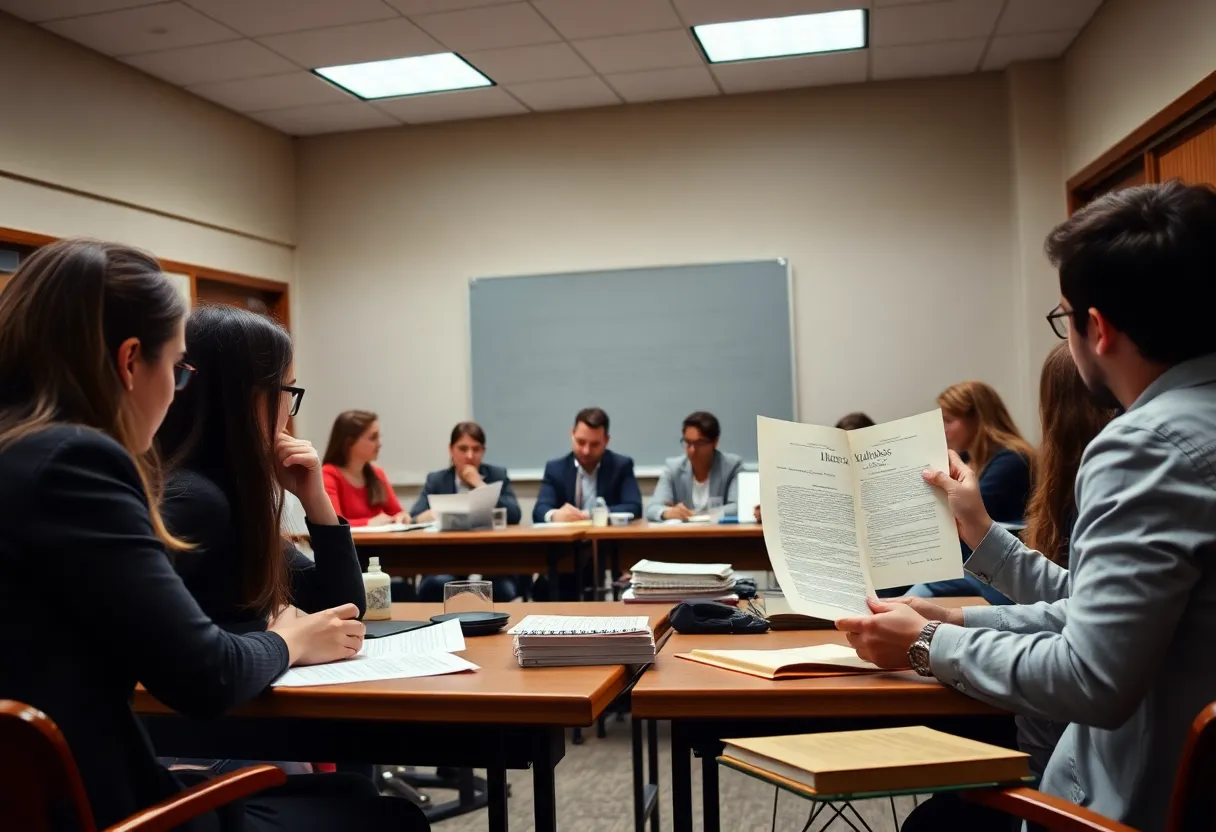
In Texas, an innovative course titled “Originalism & the Origins of the Federal Constitution” is being offered to law students at various institutions, including Southern Methodist University’s Dedman School of Law. This groundbreaking initiative is led by federal judges Brantley Starr and Mark Pittman, who aim to deepen students’ understanding of the Constitution through its historical context and original meanings.
Course Overview
The course invites students to engage not only with legal texts but also with the broader implications of their future roles as attorneys. Throughout the semester, participants are encouraged to reflect on their responsibilities towards the republic and the importance of preserving its foundational principles. At the course’s conclusion, one of the judges emphasized the need for aspiring lawyers to recognize the weight of their profession and their role in maintaining legal integrity.
The course emphasizes originalism, a judicial philosophy that advocates interpreting the Constitution as it was understood by its framers. With a growing trend towards originalist interpretation within the Supreme Court, the judges stress the necessity of preparing future legal practitioners to grasp these vital constitutional roots.
The Debate on Originalism
While originalism is supported by many judges and legal scholars, it faces criticism. Opponents argue that relying strictly on historical interpretations can hinder the law’s adaptability to modern societal challenges. However, the judges believe that a focus on original text prevents the distortion of legal rulings by personal biases or contemporary societal views.
Maintaining a neutral set of principles is crucial to both judges. They advocate for a consistent interpretation of the Constitution, emphasizing its collective significance over individual perspectives. This approach aims to reinforce the understanding of law as a societal agreement rather than a set of personal or subjective opinions.
Course Origins
The course was initially developed by Judge Charles Eskridge at the University of Houston, drawing inspiration from Justice Clarence Thomas. Eskridge noticed a gap in historical education in law schools and sought to remedy this by exploring documents where students could study the Constitution’s essence rather than relying solely on contemporary analyses.
The collaboration between Starr and Pittman has since widened the course’s reach, extending to other law schools, including Texas A&M School of Law. Deans of participating schools have lauded the judges’ real-world legal experiences, which provide an educational experience that is rare in academia.
Influence on Legal Philosophy
The judges also share their personal legal journeys and insights throughout the course. Following their exploration of historical documents, Pittman has advocated for the use of 12-member juries in civil trials, believing this structure fosters fairness in the judicial process. This shift reflects the ongoing discussions within conservative legal circles regarding originalism and its contemporary implications.
Future Aspirations
As the course wraps up, Starr and Pittman express their hope for the future inclusion of judges with various political perspectives in teaching originalism. By fostering dialogue on constitutional interpretation, they aim to promote a richer legal discourse and ensure the essence of the Republic is upheld for generations to come. This educational initiative connects law students to the origins of American governance, making the foundational concepts of the law relevant in today’s society.
Deeper Dive: News & Info About This Topic
- Bloomberg Law: Federal Judges School Future Lawyers on Originalism
- Salt Lake Tribune: Letter on Justice Clarence Thomas
- NBC News: Originalism Dead Letter? Supreme Court Majority Accused of Abandoning Legal Principles
- Deseret News: Why Constitutional Originalism Is Not a Partisan Legal Theory
- Wikipedia: Originalism