

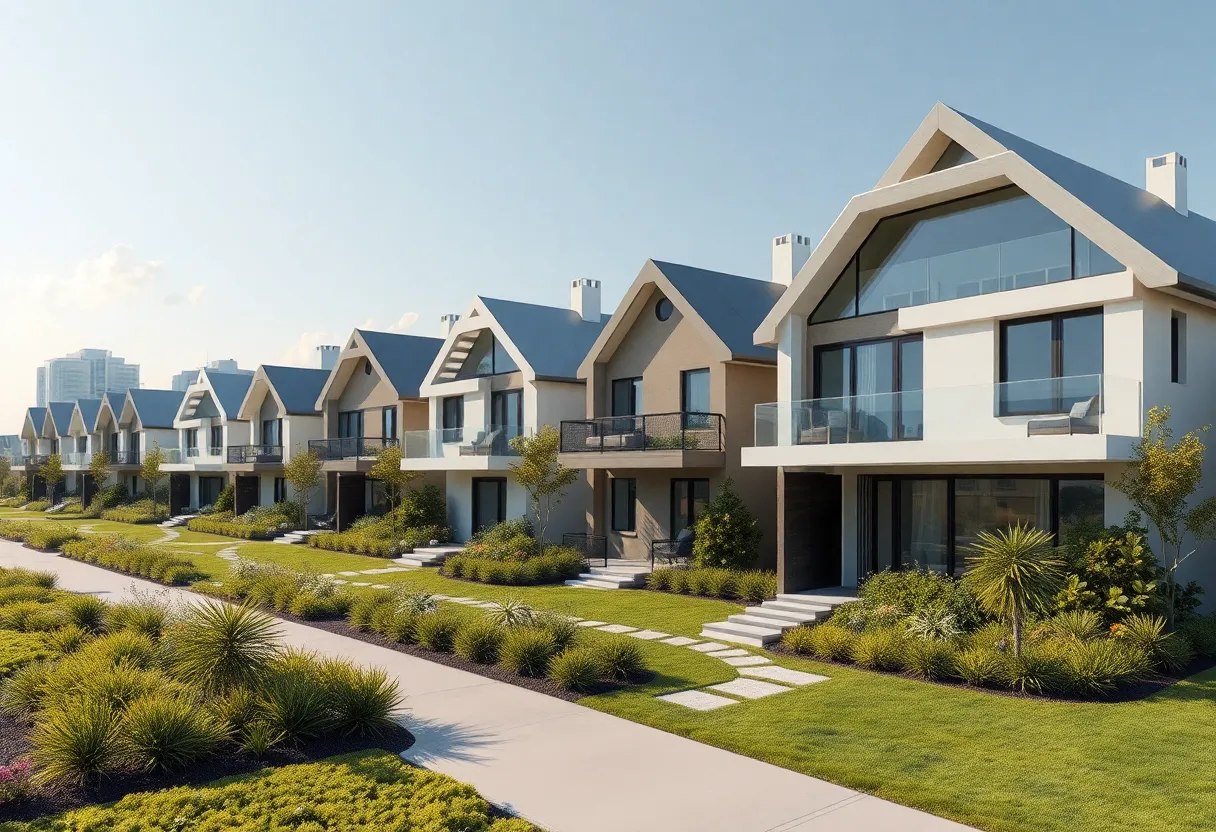
Austin, Texas, February 8, 2026
In Austin, Texas, builders are turning to 3D printing technology to tackle the rising housing shortage, construction costs, and lack of skilled labor. This innovative approach, evolving from experimental projects to real developments, is offering affordable and energy-efficient homes. The advantages of 3D-printed homes include reduced costs, improved durability, and design flexibility, with various communities across the U.S. actively adopting this technology to address pressing housing issues.
Housing Shortages Propel 3D-Printed Homes from Experiment to Reality
Austin, Texas – In response to the United States’ escalating housing shortage, rising construction costs, and a limited supply of skilled labor, builders are increasingly turning to 3D printing technology to construct homes more efficiently and affordably. This innovative approach is transitioning from experimental projects to tangible developments in active U.S. neighborhoods.
Advancements in 3D-Printed Housing
Previously confined to small-scale pilot projects, 3D-printed homes are now being built and sold in various U.S. communities. The technology utilizes large-scale printers to extrude layers of concrete, forming walls in a fraction of the time required by traditional construction methods. In Austin, Texas, a 3D-printed housing development is actively addressing the housing crisis by offering durable and energy-efficient homes.
Benefits of 3D-Printed Homes
Proponents of 3D-printed homes highlight several advantages:
- Affordability: The streamlined construction process reduces labor and material costs, making homes more accessible to a broader range of buyers.
- Durability: Concrete walls are designed to resist pests, weather, and structural wear, enhancing the longevity of the homes.
- Energy Efficiency: The construction method allows for better insulation, leading to reduced energy consumption and lower utility bills.
- Design Flexibility: Curved interiors and customizable layouts provide greater design options compared to traditional building methods.
Real-World Applications
The adoption of 3D-printed homes is gaining momentum across the nation:
- Texas: The Wolf Ranch community in Georgetown comprises 100 3D-printed homes built by Lennar and ICON. These single-level ranch houses are constructed using a proprietary material called Lavacrete, offering enhanced durability and energy efficiency.
- California: In Wapakoneta, Ohio, Sustainable Concrete Innovations completed the state’s first 3D-printed home, demonstrating the potential of this technology to revolutionize the housing market.
- International: The Tecla house in Italy, a prototype 3D-printed eco-residential building made from clay, showcases the global interest in sustainable and affordable housing solutions.
Industry Outlook
The shift towards 3D-printed homes is poised to address critical housing shortages by offering a faster, more cost-effective, and sustainable construction method. As technology advances and adoption increases, 3D-printed homes are expected to become a significant component of the housing market, providing innovative solutions to longstanding challenges.
Key Features of 3D-Printed Homes
| Feature | Description |
|---|---|
| Construction Speed | Significantly faster building process compared to traditional methods. |
| Cost Efficiency | Reduced labor and material costs, making homes more affordable. |
| Durability | Concrete structures that resist pests, weather, and wear. |
| Energy Efficiency | Improved insulation leading to lower energy consumption. |
| Design Flexibility | Ability to create customized layouts and curved interiors. |
Frequently Asked Questions (FAQ)
What are 3D-printed homes?
3D-printed homes are residences constructed using large-scale 3D printers that extrude layers of concrete to form walls and structures, offering a faster and more cost-effective building process compared to traditional methods.
How do 3D-printed homes address housing shortages?
By reducing construction time and costs, 3D-printed homes enable builders to produce affordable housing more rapidly, helping to alleviate the housing crisis in many regions.
What are the benefits of 3D-printed homes?
Benefits include affordability, durability, energy efficiency, and design flexibility, making them an attractive option for both builders and buyers.
Where are 3D-printed homes being built?
3D-printed homes are being constructed in various locations, including Texas, California, and internationally in Italy, showcasing the global adoption of this technology.
What is the future outlook for 3D-printed homes?
The future of 3D-printed homes is promising, with expectations of increased adoption and technological advancements leading to more widespread use in addressing housing shortages.
Deeper Dive: News & Info About This Topic
HERE Resources
Social Media Strategies Define Texas Senate Race
Austin Housing Market Slows Down from Hottest to Slowest
Austin, Texas: Pioneering 3D-Printed Homes Address Housing Crisis
Georgetown TX Sees Thriving Business Growth and New Ventures
Austin Approves $5.5 Million for Southwest Airlines Expansion
Austin Launches First All-in-One Recycling Center for Construction
California Implements AI for Faster Building Permits After Wildfires
Austin Unveils Cady Lofts: New Supportive Housing Community
Austin Proposes $101 Million Funding Package for Homelessness
The Canyon Club: Luxury Living in Texas Hill Country